Native Plant School Class Recap-Management and Potential uses of Invasive Species 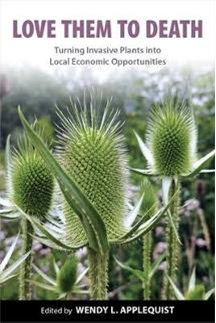
Summary and photos by Jen Sieradzki, Manager of Native Plant Horticulture for Shaw Nature Reserve
Invasive plants pose a serious threat to native species, but some can also benefit humans, supplying goods such as food, feed, medicine, or raw materials for crafts. Wendy Applequist, editor of Love them to Death: Turning Invasive Plants into Local Economic Opportunities, spoke to participants in the January 2026 Native Plant School class about whether destructive harvest of these plants could help to control them—and when you should just kill them as fast as possible.
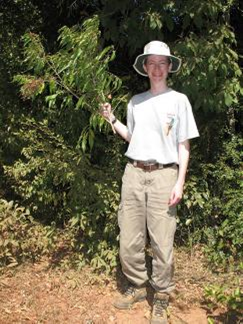 Wendy Applequist is an Illinois native who earned her PhD at Iowa State and has worked at the Missouri Botanical Garden since 2000. She is a taxonomist who works on flora of Madagascar and is interested in medicinal uses of Midwestern plants. She currently works at the William L. Brown Center—Missouri Botanical Garden.
Wendy was featured on the St. Louis Public Radio program, St. Louis on the Air, last February if you would like to hear more check out the show.
Wendy started by defining what is meant by invasive. Invasive does not include non-native species that were simply introduced or naturalized. The term invasive does not apply to a plant just because it is a weed in your yard. An introduced species can be invasive in some regions, but harmless in others. Invasive species rarely create similar ecological problems in their native range but can devastate other regions because they have a different relationship to phenology than native plants. They may leaf out earlier and later than native species so they have more time to soak up sun and send that energy to their roots…outcompeting native plants. Also, herbivores, pests, or pathogens that keep their numbers down at home may not be present in a new area.
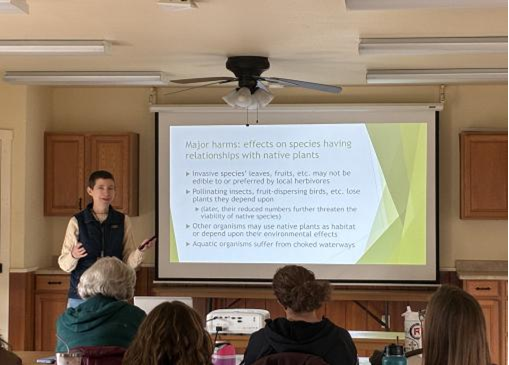
Invasive species…or inconvenient change? We discussed that climate change may be expanding the native range of some species. Wendy recommended being cautions about trying to extirpate plants trying to respond to climate change. We must consider that as climate change affects the native range of plants, we should study how insects and animals respond to the species. Ask, is it playing a positive or beneficial role in the local ecosystem? Is it supporting life?
Aside from the ecological impacts of invasive plants, the economic cost of invasive species is substantial, estimating it to be at $21 billion per year between 2010-2020.
“An invasive plant is a non-native species that causes harm to the environment, economy, or human, animal, or plant health.”
U.S. Executive Order 13751
Food value…
Wendy explained that many invasive species are edible. Some examples include perilla (Perilla frutescens) an ingredient in Asian and Greek cuisine, garlic mustard (Alliaria petiolata) to make pesto, and taro (Colocasia esculenta) as a root vegetable. Wendy stressed the importance of understanding how to process these ingredients correctly to make them fit for consumption.
Craft and material value…
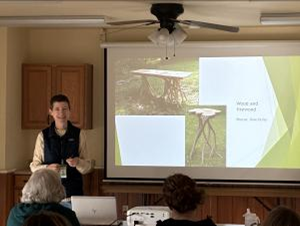
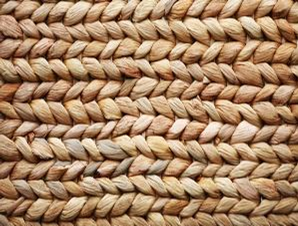
She also pointed out that these plants have value for crafting and provide wood to build things. You may be familiar with a local initiative Think About Tables, created by local Dale Dufer. He makes beautiful tables out of the wood of bush honeysuckle (Lonicera spp.). Wintercreeper (Euonymus fortunei) shoots are flexible and can be used in basket weaving.
Some of the additional species that were covered include:
kudzu (Pueraria montana var. lobata)
The root starch is edible, medicinal, and the flowers can make jelly and tea.
The fruit is edible and tasty, the leaves and root bark medicinal, and it had flexible shoots that can be used in basketry.
Japanese knotweed (Reynoutria or Fallopia japonica)
Young shoots are an edible vegetable, the flowers make good honey, and the leaves can be added to fodder for livestock.
Common reed (Phragmites australis)
Makes biomass and biofuel
Harvest invasive species with the goal of controlling or eliminating populations…
Aggressive harvest of these plants is yet another tool in the battle against the spread of invasive species. Participation in harvesting and crafting promotes feelings of competence, independence, and self-actualization. Wendy said, “For households with economic constraints it can supply improved nutrition, free medicine, and economic opportunities.”
Foraging for native plants can damage plant populations and should be done carefully and responsibly if at all. Many of us don’t have access to property to forage on anyway. But with invasives it’s the opposite. Harvest invasive species with the goal of taking it all aggressively. And chances are, no one is going to say no if you want to remove invasives from their property. Wendy stressed that no one should plant invasives at all in the first place but that as long as we are attempting to remove and control them we may as well benefit from our efforts!
Our February NPS class is sold out, but you can sign up to be on the wait list. Keep an eye on the online registration for March, April, and May classes not yet posted. Remember to use the filters to search SNR classes.
Thanks to Wild Ones St. Louis for supporting these opportunities!