Gathering highlights by Donna Short
Orchids in Missouri
Presented by: John Oliver
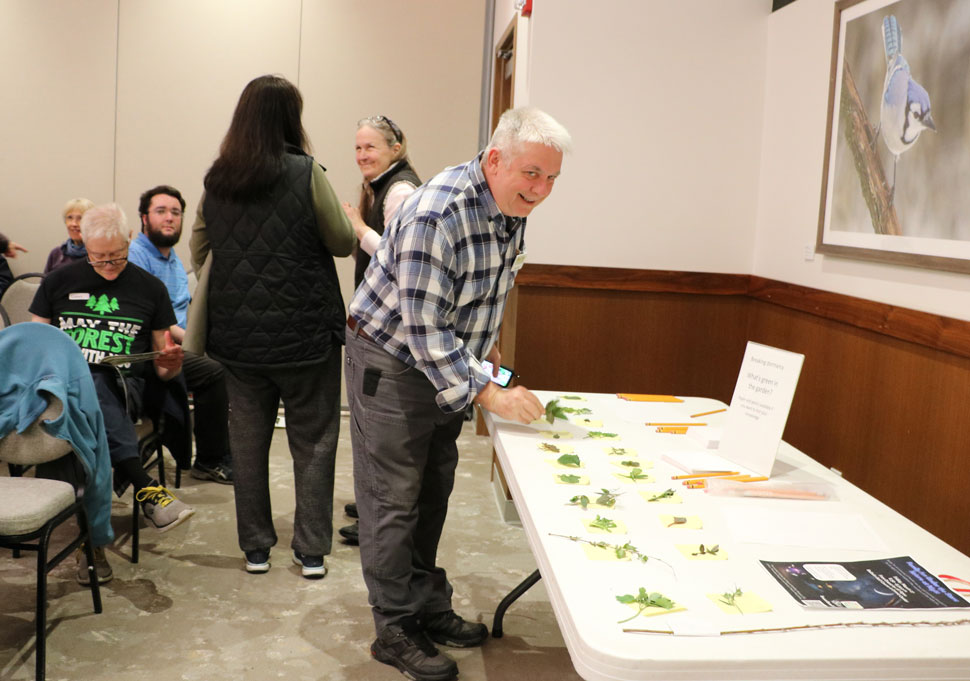
For the last Winter Speaker Series event of the year we began early with a social period and various activities. Below was an opportunity to test your knowledge with a “Breaking Dormancy” quiz to identify plants by the first leaves of spring!
Marsha Gebhardt, Wild Ones St Louis President, began with announcements of upcoming spring activities and events before she turned the microphone over to John Oliver.
John Oliver is a long-time member of the Missouri Native Plant Society and the Webster Groves Nature Study Society, and serves on the Board of NatureCite. He served as president of MONPS statewide, president of its St. Louis Chapter, and currently leads the field trips of the WGNSS botany group. It has been his good fortune to have known, listened to, and botanized with some of the most talented botanists in Missouri. John attributes his knowledge to them.
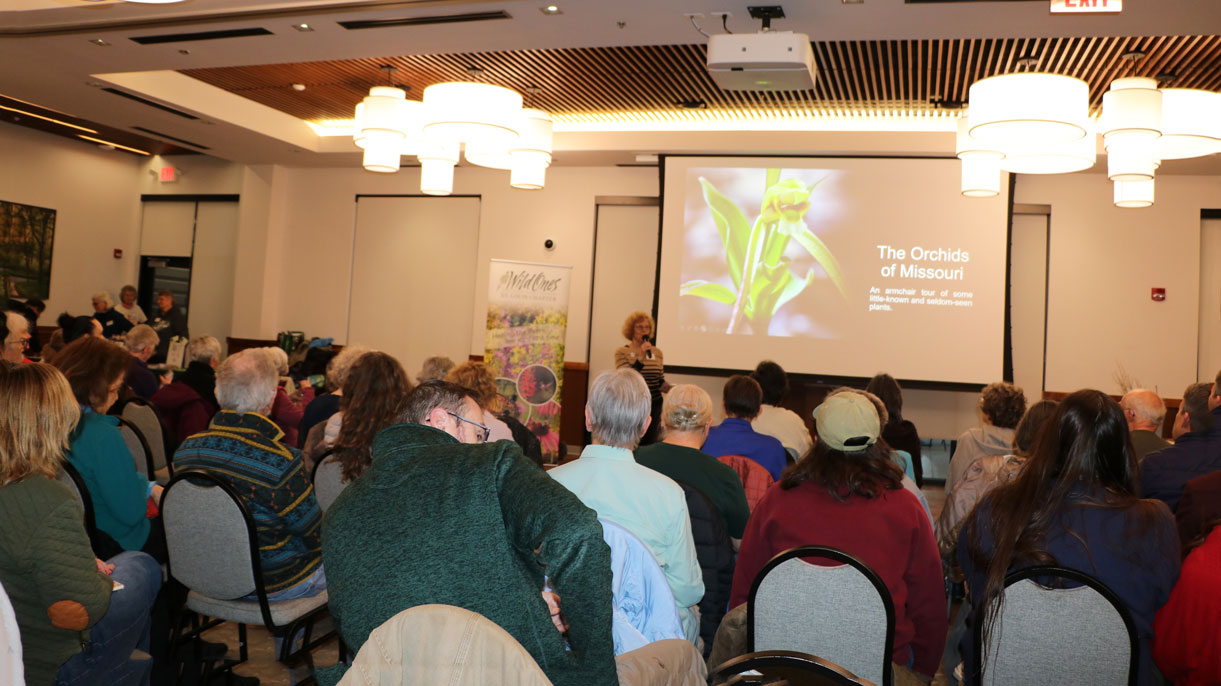
Many people are surprised to learn that orchids are native to Missouri. Forty species have been reported from our state. While John didn’t try to cover all of them, he provided many examples, including some of the most charismatic and beautiful, a few that are often not recognized by passers-by as orchids, and gave us tips for how and in what kinds of locations and conditions you might find them.
John’s firsthand and in-depth knowledge of orchids was evident in his slide show which can be viewed here.
His presentation also included some insights that are not included in the slides
Why are orchids rare?
“Many species in Missouri occur in relatively small populations and produce few fruits. Overcollection and modifications to their habitats, such as changes in soil moisture, light levels, and density of competing vegetation, have undoubtedly contributed to the present rarity of some species. All orchids have obligate
relationships with soilborne, mycorrhizal fungi and do not tolerate environmental changes well. Thus, orchids generally do not transplant well into gardens. Collectors also should avoid disturbing rootstocks and should consider photographic documentation of populations rather than herbarium specimens, as most species can be determined readily from habit and closeup photographs.”
— George Yatskievych, Flora of Missouri, Volume 1, 1999
Disturbance is the enemy of Orchid populations. Most orchid species occur in smaller numbers and fewer places today than 100 years ago.
Orchid Characteristics:
- All orchids are perennial.
- Orchids have leaves with parallel veins.
- Flower parts in groups of three. Often colorful, and/or fragrant.
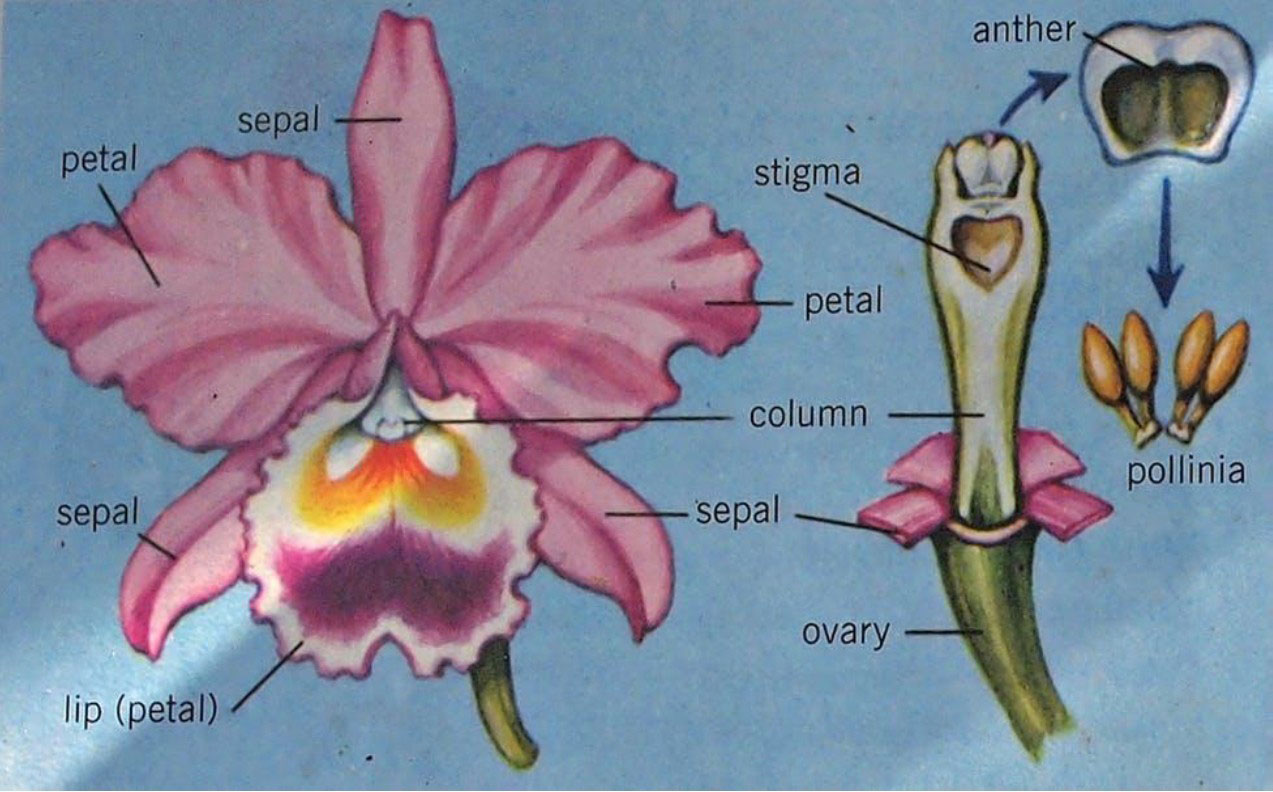
- Three sepals on outside of each flower. (Two may be fused)
- Three petals on inside, often, but not always, a different color from sepals.
- Flowers on spikes are indeterminate (blooming from bottom up)
- Flowers usually have rotated so a modified “upper” petal appears as the lower petal or lip. (resupinate)
- Successfully pollinated flowers form seed capsules with MANY seeds (dust-like).
- Seeds are short-lived, the embryos are mostly undifferentiated, many will fail to germinate, and most will fail to reproduce.
John had many orchid stories where he described orchids that were believed to be extinct until re-discovered later or orchids that moved to other locations.
Orchid Architecture – Morphological features and structures shown here: Photo 04
Types of Orchids:
Orchids that are hard to see
- a) Orchids we see more often as leaves than as flowers
- b) Saprophytic orchids – no chlorophyll, no leaves
- c) Ones that are hard to see because they are small, or ephemeral, or “invisible” because of camouflage.
Charismatic orchids – the ones everyone wants to see
- a) Pogonia – The snake mouth orchid
- b) Calopogons – The grass pinks
- c) Spiranthes – The ladies’ tresses
- d) Platantheras – The fringed orchids
- e) Cypripediums – The lady’s slipper
See John’s slide show here , the last slide provides links to a variety of sides containing additional information and orchid photos.