Native Plant School Summary – July 2026
Instructor – Jen Sieradzki, Native Plant Horticulture Manager, Shaw Nature Reserve
Native annual plants are a wonderful way to add a little something different to your home landscape. They add color and often have long bloom times. Many of them are important nectar sources for insects, some supporting specialist pollinator species. One of my favorite functions they serve in a landscape is that annuals fill in the empty spots in a garden and tend to mingle with perennials rather than compete with them.
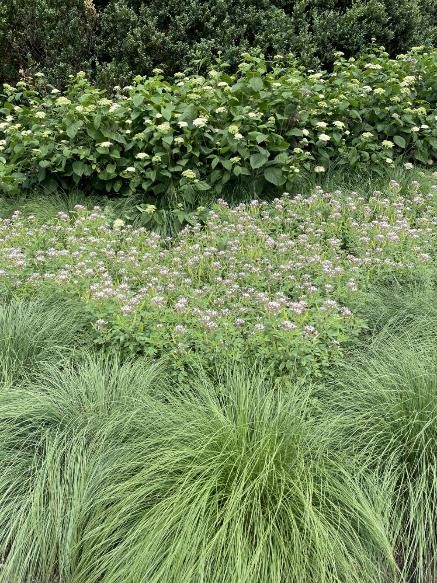
Polanisia dodecandra (red whisker clammyweed) filling in spaces between other perennial plants Hydrangea arborescens (wild hydrangea) and Sporobolus heterolepis (prairie dropseed).
Twenty-two people visited Shaw Nature Reserve to attend this Native Plant School class; many of them were seeing the native plant gardens at Shaw Nature Reserve for their first time!
We discussed summer annuals, winter annuals, biennials, and short-lived perennials. Plants that fall into these categories can serve the same functions in landscapes although there are key differences.
An annual completes its life cycle in one year. During this period, they grow, mature, bloom, produce seeds and die. Summer annuals complete their life cycle during summer or fall; while most winter annuals germinate during fall and winter and then flower and seed the following spring.
A biennial requires all or part of two years to complete its life cycle. During the first season, it produces leaves and food storage organs. The plant overwinters and then produces flowers, fruit, and seeds during its second season.
Sometimes biennials go from seed germination to seed production in only one growing season. This situation occurs when extreme environmental conditions, such as drought or temperature variation, cause the plant to pass rapidly through the equivalent of two growing seasons.
Perennial plants can live for years going through cycles of growth and dormancy, but short-lived perennials tend to stick around for a couple of years and reseed themselves. The original plant may not re-appear after a couple of years, but its seedlings will appear and move about the garden, often germinating in empty spots between other plants.
Get to know your seedlings!
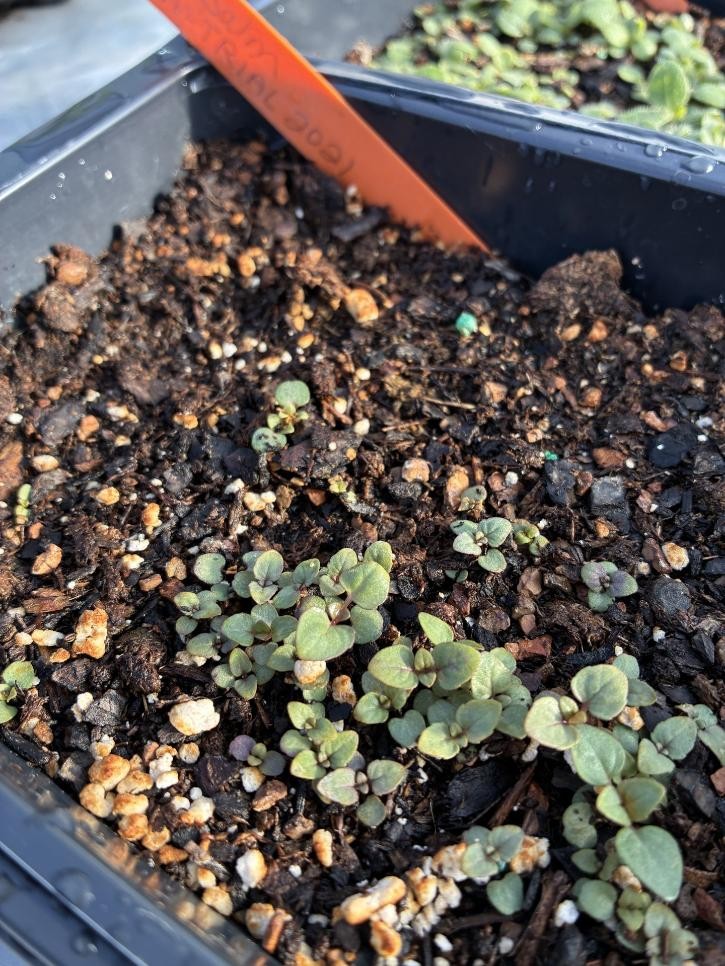
Monarda bradburiana (bee balm) seedlings. Bee balm can act as a short-lived perennial in many areas in the St. Louis region.
It is important to get to know what the seedlings of plants look like because native annuals are often accidentally weeded out of landscapes before they even have a chance to shine. While growing any plant, try to recognize plants at various stages of growth…seed, seedling, juvenile, and flowering. It’s a fun identification challenge and will increase your chances of growing a successful native plant garden, whether you are growing annuals or perennials. It also prevents you from leaving aggressive weeds to grow because you may not be sure if the seedling is a desirable species or not.
It’s best to identify seedlings after they develop their true leaves. The very first leaves to appear after germination are called cotyledons…and many plants look the same at this point. Once the seedlings get a little bigger, they begin to take on their distinct form.
Abundant ecological value
Many annual native species have important pollinator relationships. Coreopsis tinctoria supports specialist bees and is a good nectar food source for moths. And another bonus…deer don’t seem to be attracted to it!
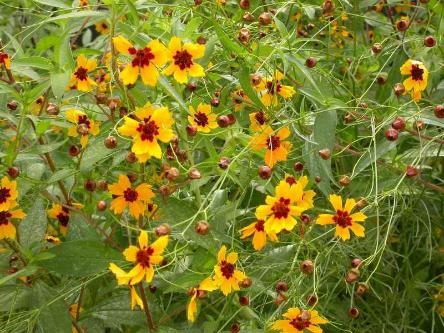
Coreopsis tinctoria (plains coreopsis). Photo courtesy Missouri Botanical Garden Plantfinder.
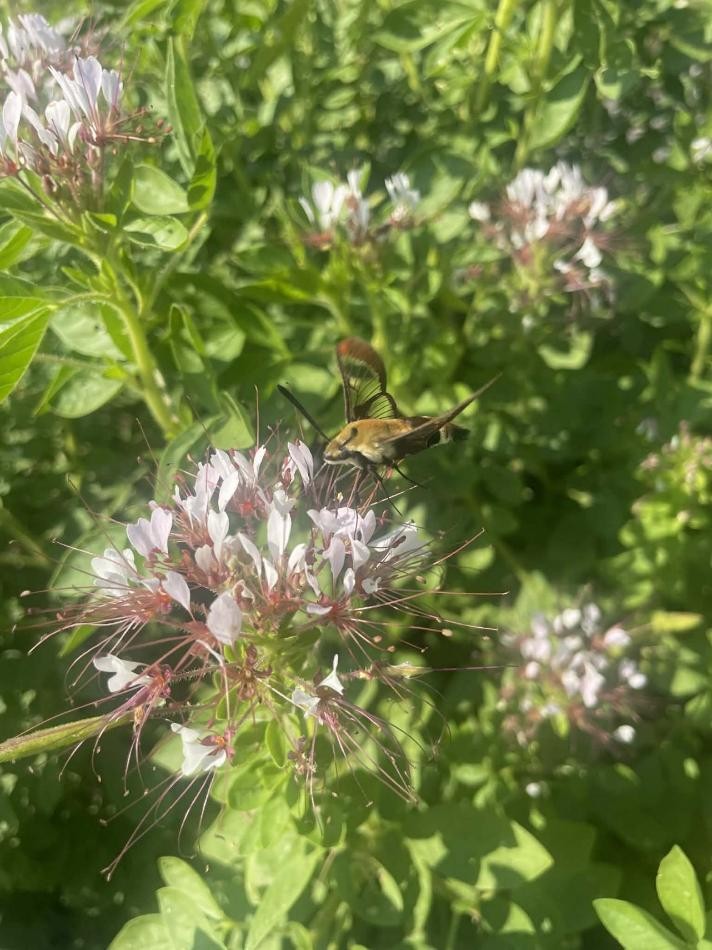
A clearwing moth enjoying nectar from Polanisia dodecandra (red whisker clammyweed). Photo credit Emily Dunlap, Native Plant Horticulturist Shaw Nature Reserve.
List of annual plants discussed:
- Polanisia dodecandra (red whisker clammyweed)
- Euphorbia marginata (snow on the mountain)
- Cuphea viscosissima (blue waxweed)
- Coreopsis tinctoria (plains coreopsis)
- Phacelia purshii (Miami mist)
- Agalinus tenuifolia (slenderleaf false foxglove)
- Chamaecrista fasciculata (partridge pea)
- Palafoxia callosa (small palafox)
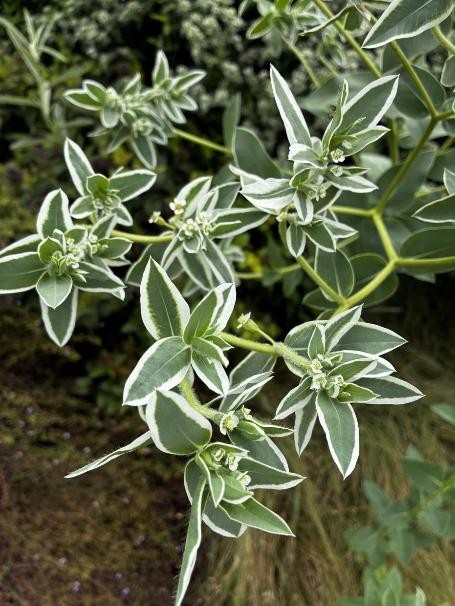
Annual plant Euphorbia marginata (snow on the mountain) in the Ozark Ethnobotany garden. While there are several documented ethnobotanical uses of snow on the mountain, it does contain a milky sap that can cause contact dermatitis and can be toxic to pets and livestock. Use it with caution. It also reseeds heavily although it also pulls out easily.
Winter annuals discussed:
- Collinsia verna (blue-eyed Mary)
- Triodanis perfoliata (clasping Venus’ looking glass)
- Corydalis flavula (yellow fumewort)
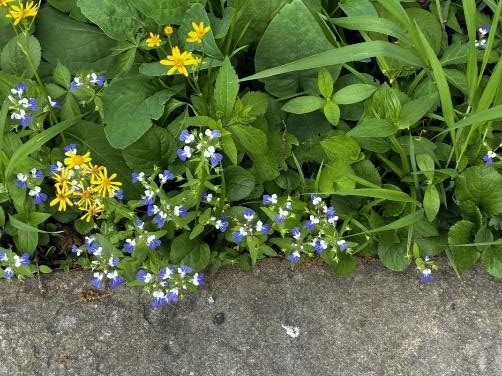
Photo: Collinsia verna (blue-eyed Mary) with Packera obovata in April in the Whitmire Wildflower Garden.
Biennials discussed:
- Erysimum capitatum (western wallflower)
- Castilleja coccinea (Indian paintbrush
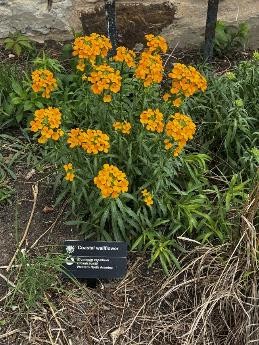
Erysimum capitatum (western wallflower) can be extremely variable in size and flower color and can hybridize resulting in variations. Common names can also vary depending on region. Some common names include sand dune wallflower, western wallflower, coastal wallflower, and prairie rocket. To effectively communicate what plant you are referring to with others it is wise to use the scientific genus and species name, especially if you are trying to purchase a plant.
Short-lived perennials discussed:
- Glandularia canadensis (rose verbena)
- Monarda bradburiana (bee balm)
- Lobelia cardinalis (cardinal flower)
- Rudbeckia hirta (black-eyed Susan)
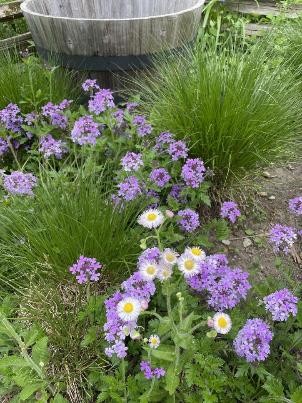
Short-lived perennials make great filler plants. Glandularia canadensis (rose verbena) grows between Sporobolus heterolepis (prairie dropseed) without competing with it.
Annuals and biennials can also be semi-parasitic
Native annuals and biennials can be semi-parasitic, meaning that while they can photosynthesize and make their own food, they still tap into the roots of surrounding plants to steal water, minerals, and nutrients.
Some examples are annual Agalinus tenuifolia (slender leaf false foxglove) and biennial Castilleja coccinea (Indian paintbrush). For instance, Indian paintbrush seems to do best when planted with little bluestem, Penstemon, and blue-eyed grass.
Because of these specific relationships, semi-parasitic plants are difficult to cultivate unless they are planted with their preferred host plants.
Nitrogen fixer – improves soil fertility
Nitrogen is held together by a strong bond that makes it completely unusable for most living organisms. To enter the food chain, nitrogen must be broken apart to be utilized. Many plants in the legume family are known nitrogen “fixers” and can improve soil fertility and access to nitrogen in the soil.
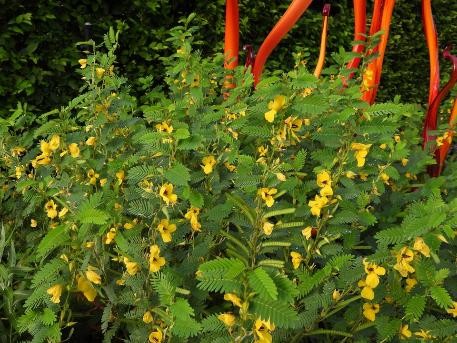
Annual Chamaecrista fasciculata (partridge pea) is one such plant. It helps with erosion control and is a nitrogen fixer. Also, seeds are regularly consumed by birds, the plants provide cover for game birds and browse for deer, and the flowers are a good nectar source for bees and butterflies.
All of these are hopefully encouragement to consider getting annual native plants into your garden. Try sowing seeds into your garden later this year or early next spring. Native annual plants can be hard to find for purchase so ordering seed from trusted native plant seed companies is a good option. Enjoy the color they add to your native plant garden and enjoy watching the insects and birds they attract!
This class was sold out with a waiting list, and we received positive feedback at the end. We even received a complementary email afterwards from one of the attendees! Thanks to St. Louis Wild Ones for supporting this work and for sharing the mission of encouraging folks to “go native”!
“Please tell Jen and all the other staff involved with the annual class how much it was appreciated to have seeds and plant cuttings distributed as part of the program. It was a bonus to encourage us to take on the mission of going native. They all are so knowledgeable and dedicated to their work.”