What do I plant now? – Alternatives to invasive plants in home gardens
February 26, 2026 Native Plant School Class at Shaw Nature Reserve
Summary by Jen Sieradzki, Manager of Native Plant Horticulture for Shaw Nature Reserve
Missouri banned the sale of six invasive plant species with the approval of Senate Bill 105 last year. In this class, we discussed ideal native plant replacements for those species in home gardens.
Jen Sieradzki, Manager of Native Plant Horticulture at Shaw Nature Reserve, taught the class of 20 people. It began by discussing the difference between a native plant, an invasive plant, and simply an aggressive plant. We expanded on definitions presented in last month’s class taught by Wendy Applequist, Research Scientist at the William L. Brown Center and co-author of Love them to death – turning invasive plants into local economic opportunity.
Invasive does not include non-native species that were simply introduced or naturalized. The term invasive does not apply to a plant just because it is an aggressive weed in your yard. Plants such as dandelions are not native but they have naturalized. Dandelions, while they might be a plant you don’t want, are not causing harm to the environment, economy, humans, animals, or to other plants as invasive species do.
We learned how to identify the six invasive species listed in Senate Bill 105:
Euonymus fortunei var. coloratus (wintercreeper)
Lonicera japonica (Japanese honeysuckle vine)
Lespedeza cuneata (sericea lespedeza)
Perilla frutescens (perilla mint)
Euonymus alatus ‘compactus’ (burning bush)
Pyrus calleryana (callery pear)
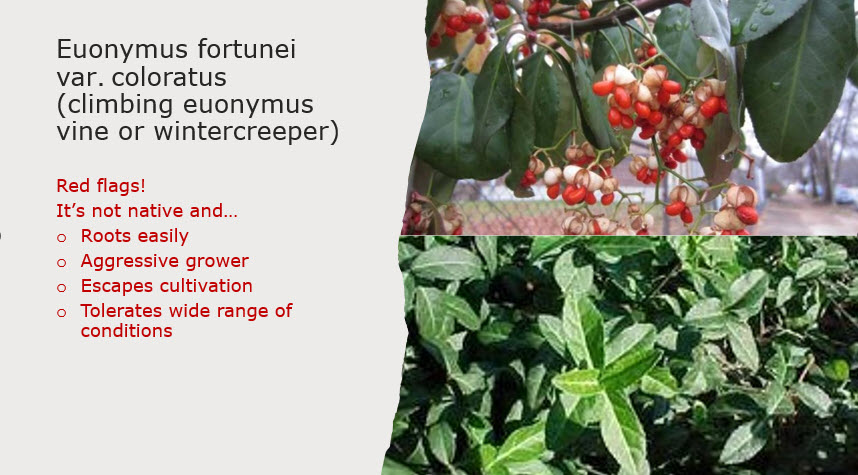
Once these invasive species are removed from your yard, it’s important to intentionally replant to provide competition against unwanted opportunistic species from moving in. Consider what your conditions are. Do you have sun, shade, moist, or dry conditions? Ask yourself what you want your landscape to do. Do you need a screen? Want to attract pollinators? Basically, ask yourself what purpose(s) you’d like your landscape to serve. How much time do you realistically want to spend gardening? Some folks love to be in their gardens every weekend whereas others may not garden for a hobby. Answering those questions will help you determine what species you should replant with.
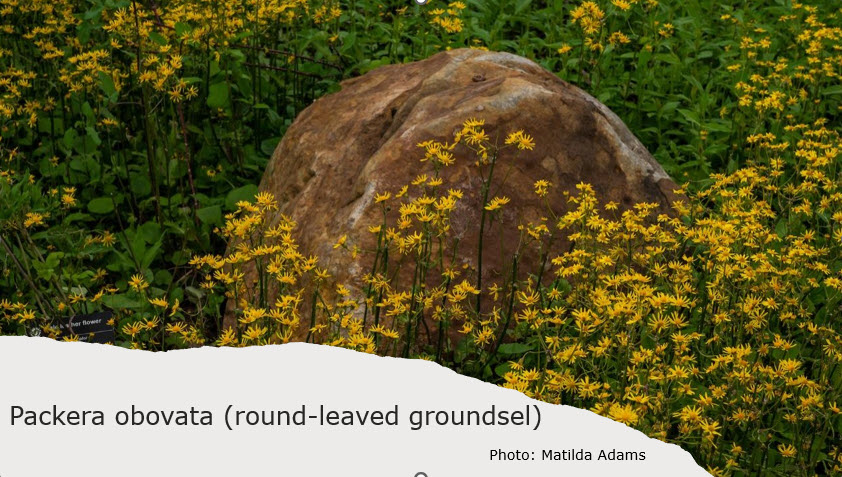
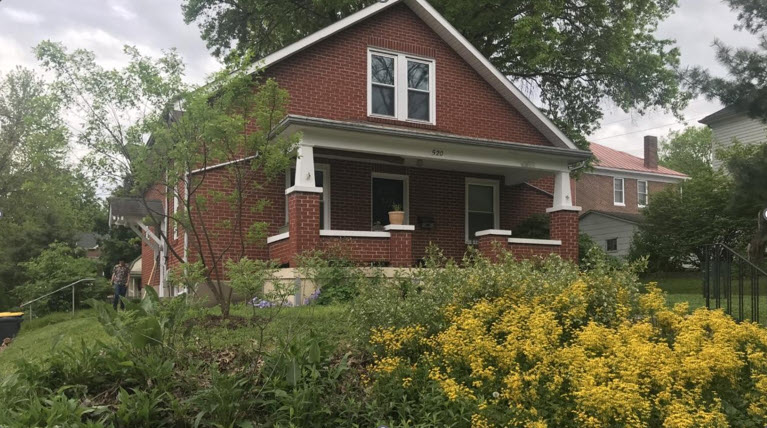
Remember you don’t have to replace a vine with a vine…you have options! We looked at one case study where a front yard hillside had been planted with wintercreeper so the former homeowner would not have to mow. The new homeowner didn’t want to mow a hillside either but also didn’t want the wintercreeper. Solution? The hillside was replanted with Aronia melanocarpa (black chokeberry) and Packera obovata (round-leaved groundsel). The chokeberry helped to control erosion because of its dense root structure and suckering habit while the round-leaved groundsel covered the ground and created competition for other plants.
Some other wintercreeper replacement options are: Asarum canadense (wild ginger), Matteuccia struthiopteris (ostrich fern), and even a matrix of early spring plants could be added to the planting of ostrich fern, extending the time native plants are acting as a groundcover. Consider plants such as Stylophorum diphyllum (celandine poppy, Mertensia virginica (Virginia bluebells), Hydrophyllum species (waterleaf).
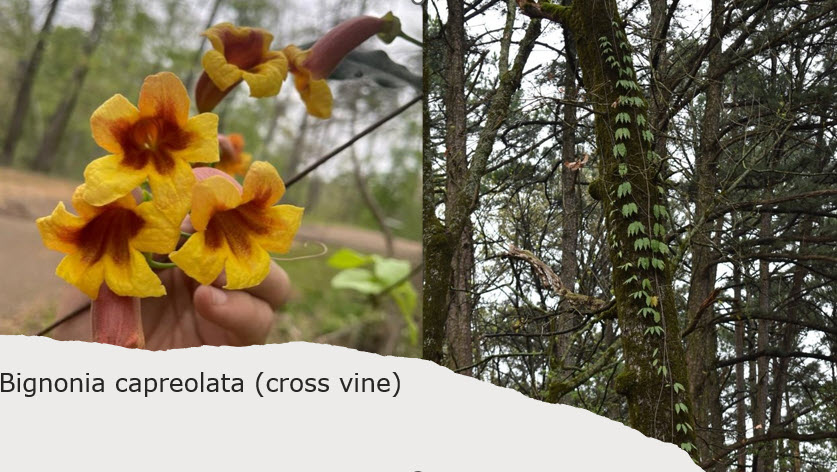
Or you may choose to replace a vine with a vine. One vine with similar growth habits to wintercreeper is Bignonia capreolata (crossvine). A benefit of planting crossvine as a replacement is that the colorful and tubular flowers attract hummingbirds!
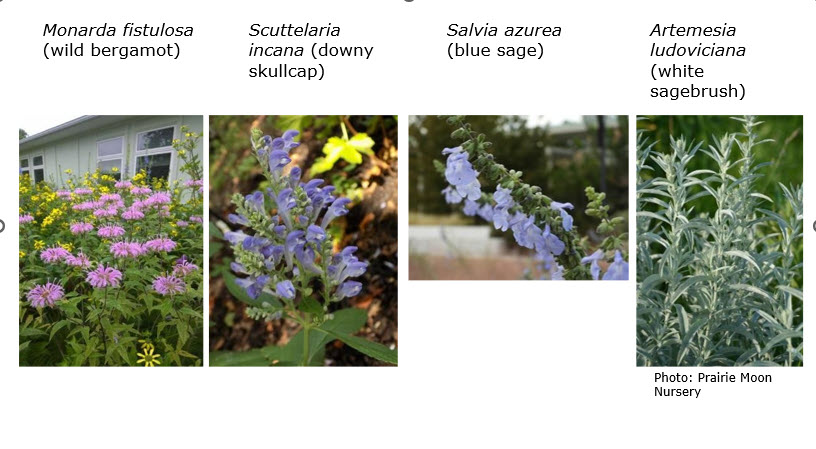
Class participants asked many good questions. One person wanted to replace her Russian sage (Salvia yangii formerly known as Perovskia atriplicifolia) with native alternatives. Although Russian sage isn’t listed as invasive in Missouri, it is not native. She mentioned that she really likes that Russian sage attracts a lot of bees and other pollinators. This was a perfect opportunity to look at native plants that are also in the mint family and attract many insects.
We considered Aristolochia tomentosa (dutchman’s pipevine), Passiflora incarnata (passionflower), or Parthenocissus quinquefolia (Virginia creeper) to replace the invasive Lonicera japonica (honeysuckle vine).
Use a matrix of Schizachrium scoparium (little bluestem), Lespedeza capitata (round headed bush clover), Chamaecrista fasciculata (partridge pea), and other deep-rooted prairie species to compete with Lespedeza cuneata (sericea lespedeza).
Alternatives to Euonymus alatus ‘compactus’ (burning bush) and Lonicera mackii (bush honeysuckle) include Aronia melanocarpa (black chokeberry), native Rhus species -(sumacs) that have amazing fall color, Lindera benzoin (spicebush) to attract the larva of the spicebush swallowtail butterfly, and the fast growing, thicket forming Staphylea trifolia (American bladdernut).
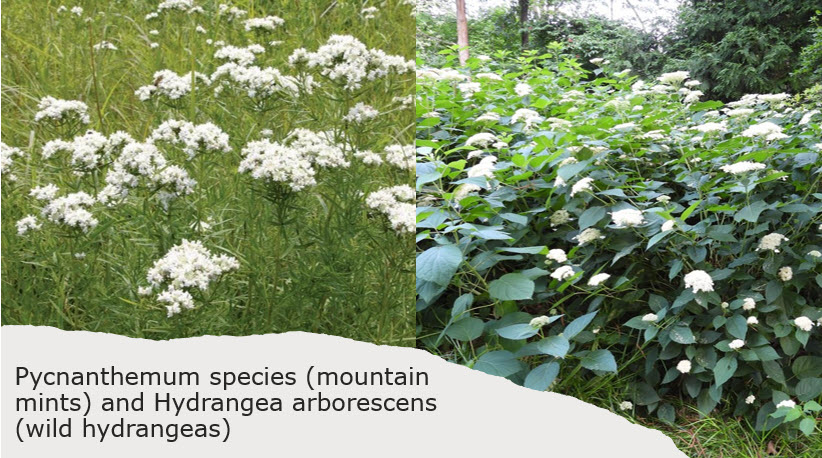
We discussed how beneficial these native alternatives are to the birds, bees, pollinators, and other wildlife that share your yard. Insider tip…Jen shared her favorite shrub and perennial combination to attract pollinators. Hydrangea arborescens (wild hydrangea) and many Pycnanthemum species bloom at the same time and attract so many insects!
Finally, we looked at small tree alternatives to Pyrus calleryana (callery pear). Among the trees that were discussed were Chionanthus virginicus (white fringetree), Ptelea trifoliata (hop tree or wafer ash), Amelanchier arborea (serviceberry), Prunus species (wild plums), and Viburnum rufidulum (rusty blackhaw viburnum).
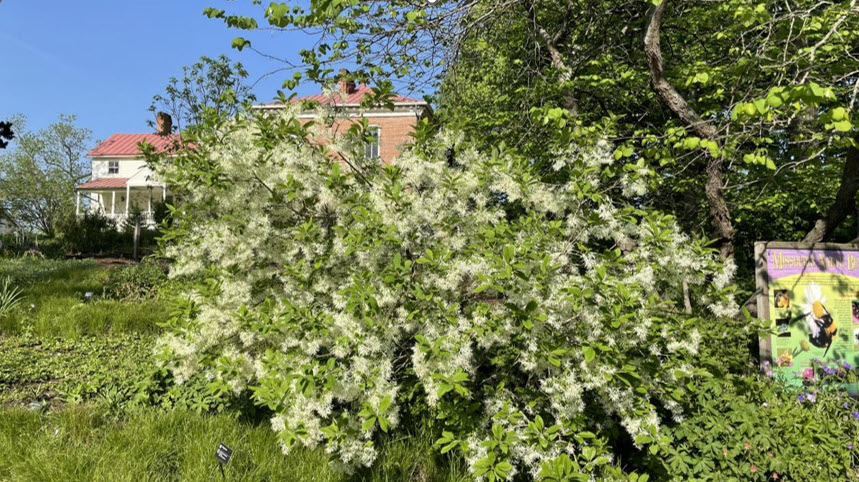
Chionanthus virginicus (white fringetree) at Shaw Nature Reserve in the Whitmire Wildflower Garden.
Class participants took information about 40 native plant species back to their own yards and were able to get one on one advice from native plant horticulturists from Shaw Nature Reserve.
Thanks to Wild Ones St. Louis Chapter for supporting classes like this. It was clear that enthusiasm is high for replacing non-native plants with beneficial native species!
Our April NPS class is sold out, but you can sign up to be on the wait list. Keep an eye on the online registration for future classes. Remember to use the filters to search SNR classes.