Ozark Ethnobotany Garden
Shaw Nature Reserve
Saturday June 16th
Photos and highlights by Donna Short
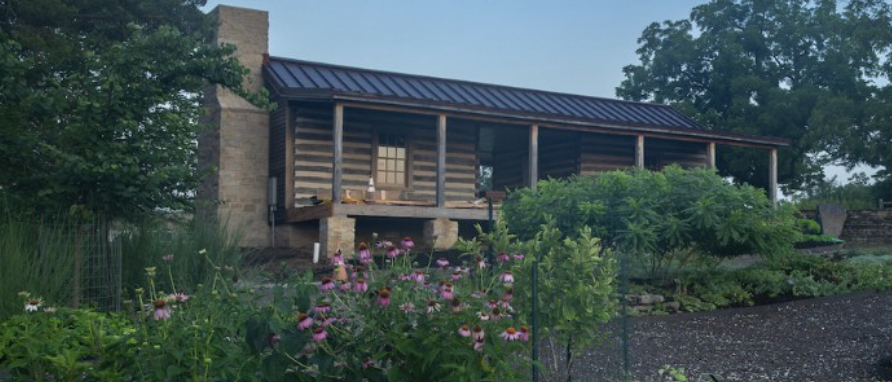
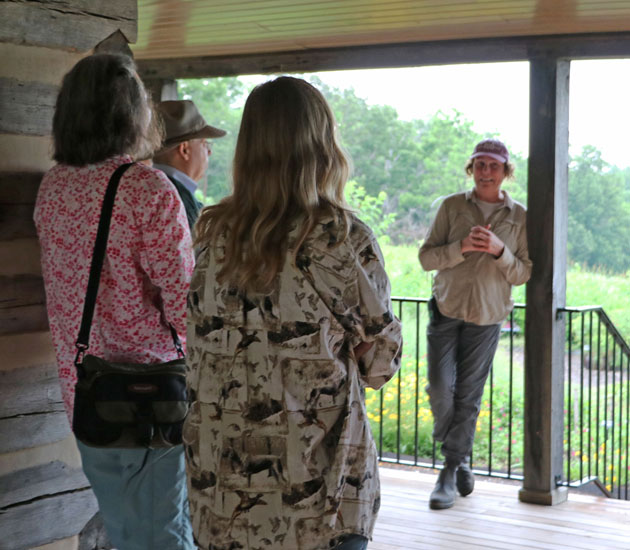
Shaw Nature Reserve Horticulture Manager, Jen Sieradzki and Horticulturist, Emily Dunlap, hosted our visit to the newly opened Ozark Ethnobotany Garden. SNR’s Ozark Ethnobotany Garden is a display garden that demonstrates how gardeners can incorporate native edible plants into home landscapes. Featuring more than 120 native plant species, the garden interprets relationships between people and plants of the Ozark region, and the aesthetic, ecological, and cultural importance of our native flora. Jen and Emily explained the design and installation process of the garden and how Missouri native plants can be used for fiber, food, medicine, and dye.
Jen provided an overview of the Ethnobotany Garden and the cabin construction. Logs for the David Thornley Orthwein cabin were salvaged from a late 1800’s cabin originally located in Viburnum, MO. A drystack stone wall surrounds the plantings. This new garden is adjacent to the Whitmire Wildflower Garden.
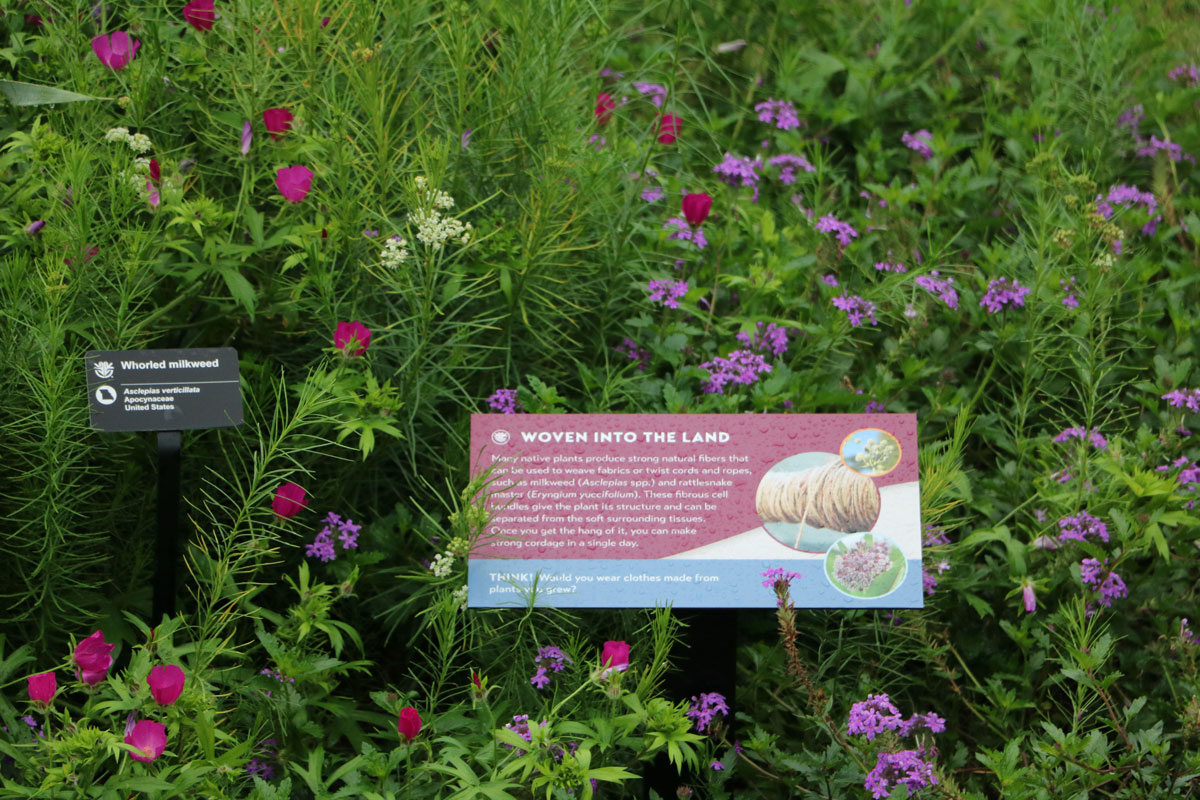
Many of the plants included in the cordage garden were plants included in most native gardens: Purple Poppy Mallow, Whorled Milkweed, Common Milkweed, Mountain Mint, Rattlesnake Master, Rose Verbena, Yarrow, Copper Iris and more. This sign is an example of the various informative signs throughout the garden!
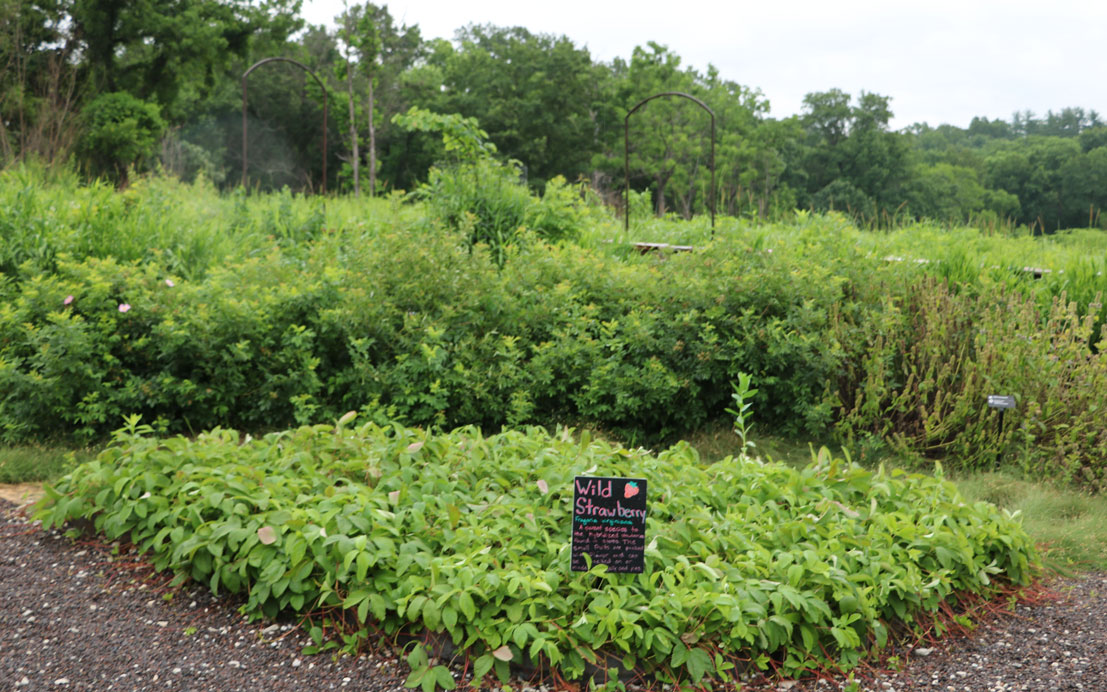
Wild Strawberries (Fragaria virginiana) can be used as a food source and a dye.
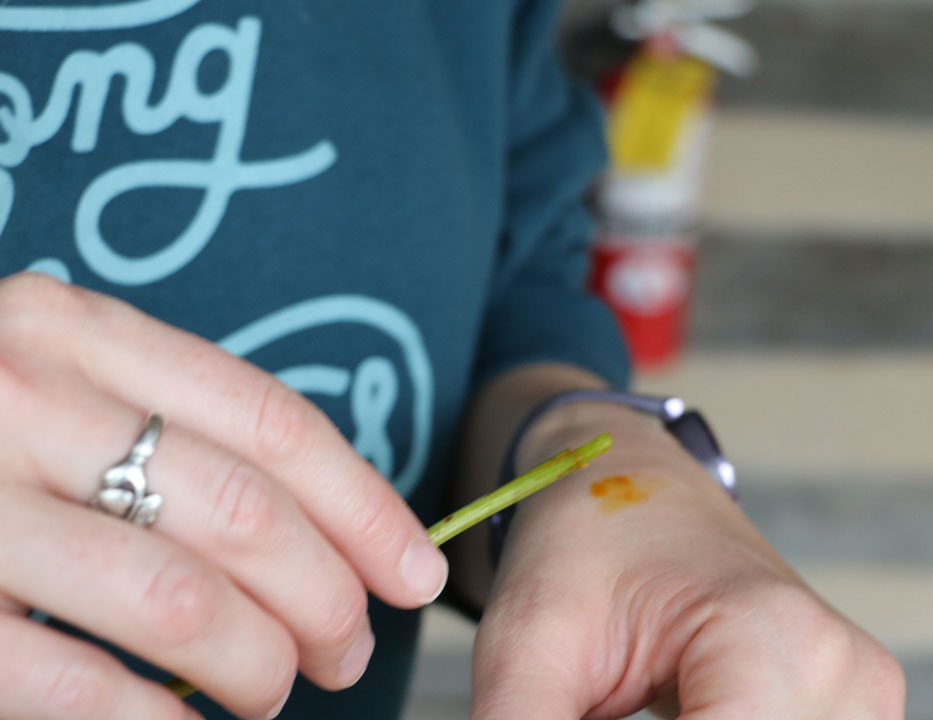
Emily explained how she is experimenting with various plants to produce dye. The stem of the Celandine Poppy (Stylophorum diphyllum) produces yellow. Her goal is to reproduce all the colors of the rainbow. According to the signage: Plants to Dye For: Many native plants are full of color making them useful in making art. For example, nature prints are created by pounding colorful leaves and flowers on paper or fabric to release their pigments. Some native plants also contain natural dyes in their leaves, roots, bark, flowers or fruits, capable of adding color to natural fibers.
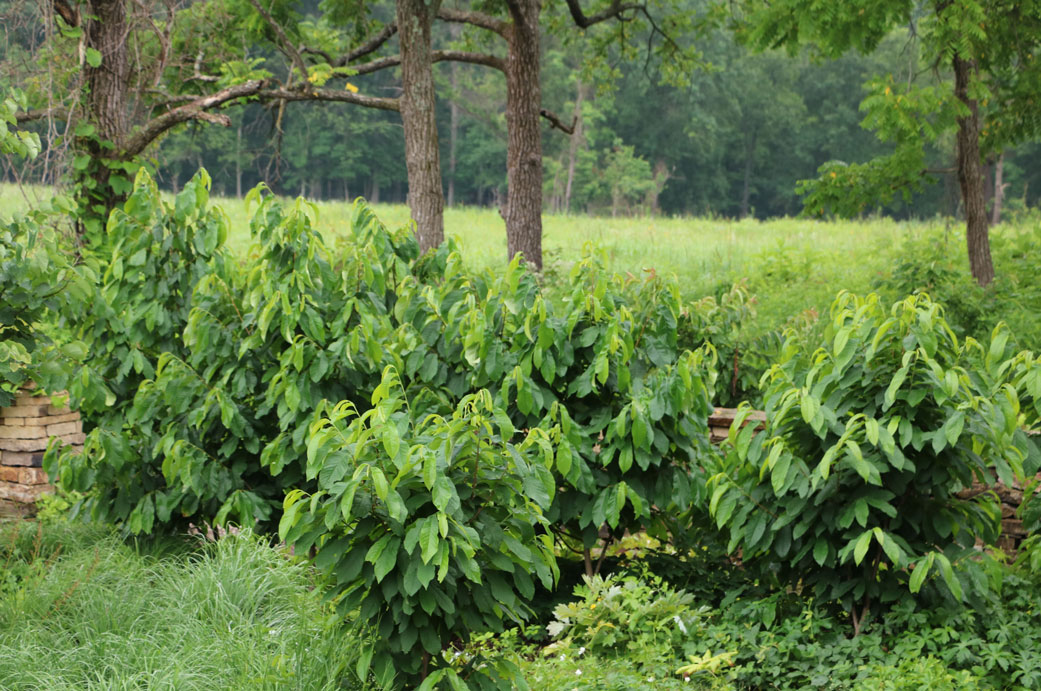
A grove of Pawpaw (Asimina triloba) trees – the fruit provides a food source. Emily explained that Pawpaw trees usually grow in colonies seeded from the original tree. In this case, these Paw Paws were grown from seeds from across the Nature Reserve in order to provide genetic diversity.
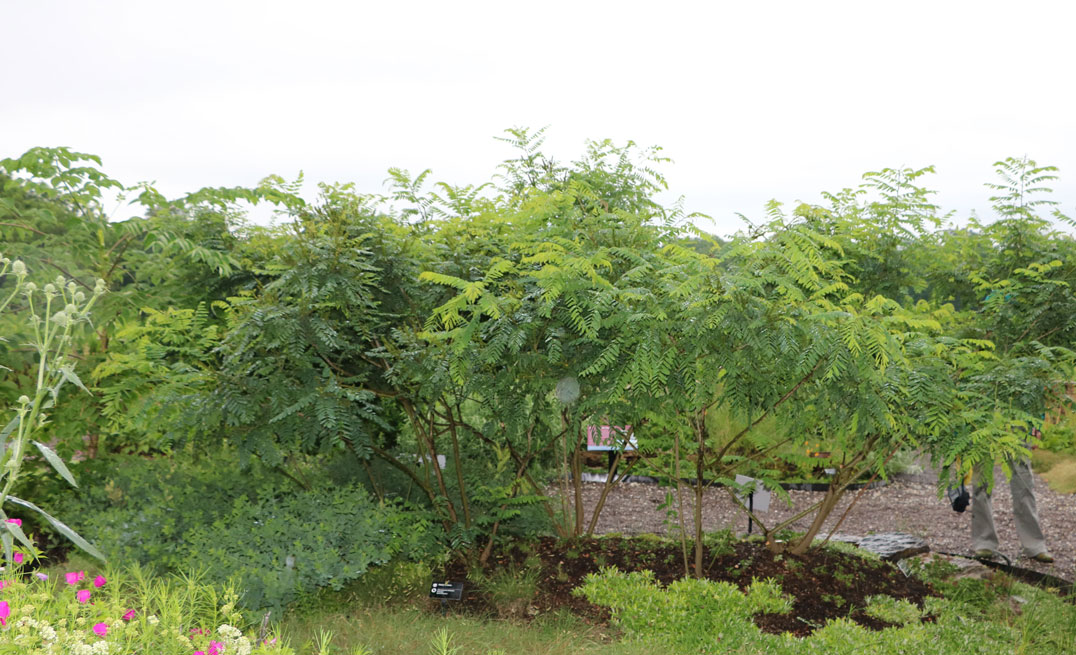
Indigo Bush (Amorpha fruticosa) provides material for dye and cordage.
Little Bluestem (Schizachyrium scoparium) used as a ground cover but also can be used for weaving.
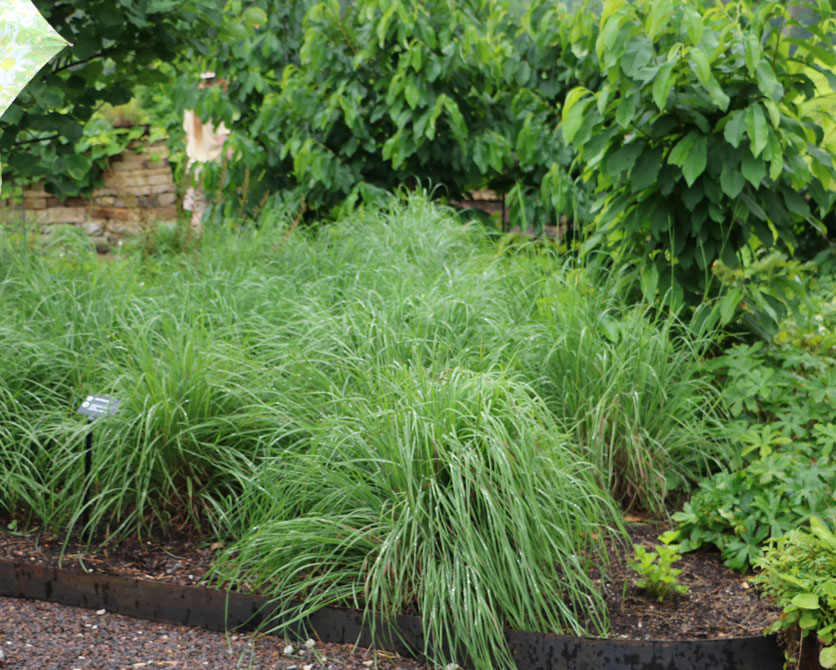
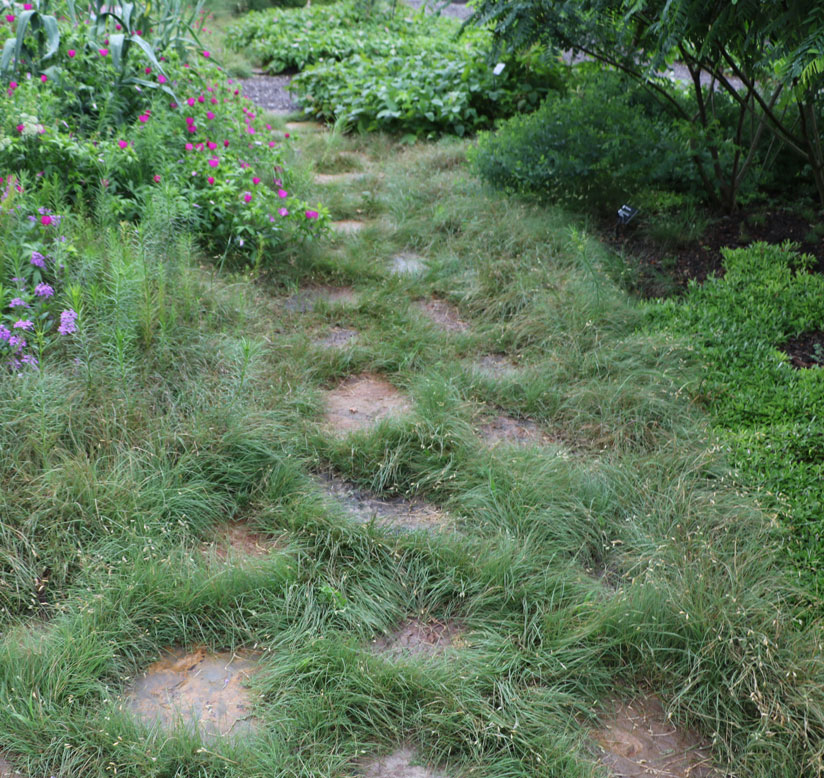
Buffalo Grass (Buchloe dactyloides) provides a ground cover along the pathways. Emily told us she cuts it with a lawn mower!
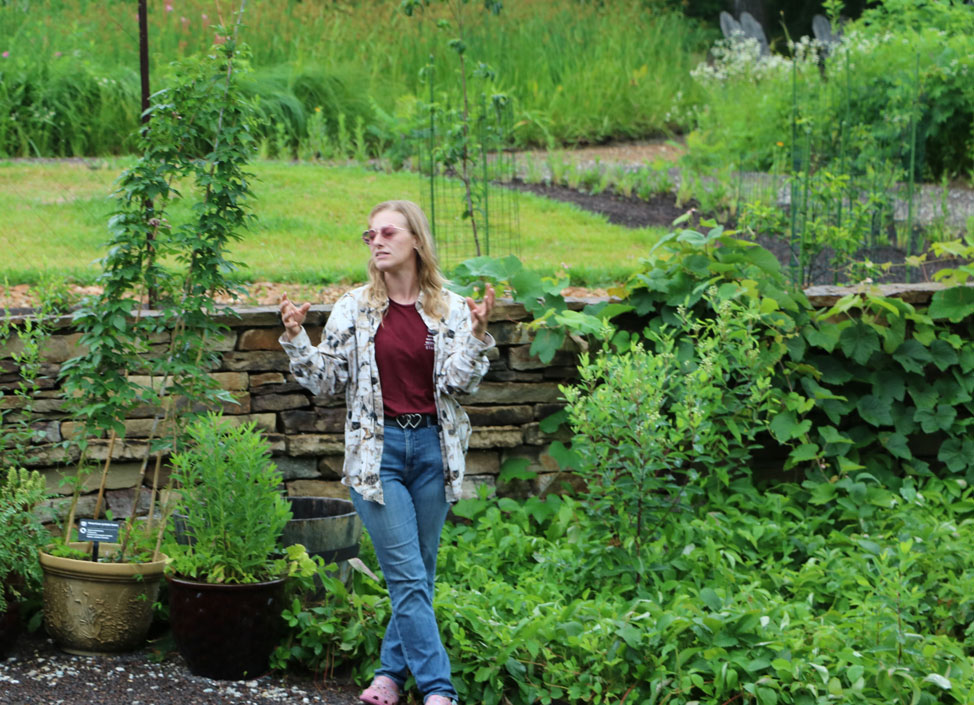
According to Emily, the American Potato Bean (Apios Americana) – found in the pot on left, has multiple uses: a food source, flowers for pollinators and the stems can be used for cordage. Grape vines are growing on the wall. Bee Balm (Monarda bradburiana) has medicinal and culinary properties and can be used as a tea, a pot herb, salad greens or a minty garnish.
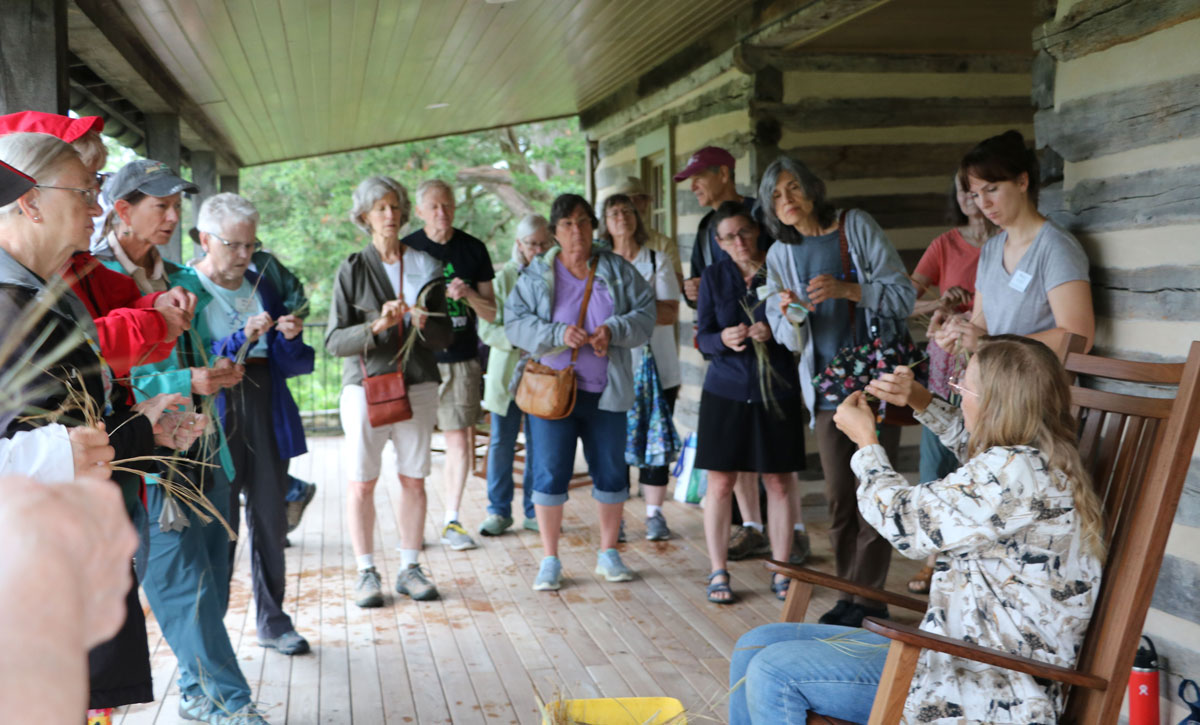
At the end of the Garden Tour, Emily instructed us on how to use dried Rattlesnake Master (Eryngium yuccifolium) to weave the strands into cordage.
The plants in the Ethnobotany Garden are primarily plants found in most native gardens and in addition to their utilitarian use for fiber, food, medicine or dye or combinations, they also provide food sources for caterpillars!