Native Plant School Summary – June 2026
Class: Dye Naturally at Shaw Nature Reserve
Instructor: Emily Dunlap, Native Plant Horticulturist at Shaw Nature Reserve
Shaw Nature Reserve native plant horticulturist Emily Dunlap led the June 2026 Native Plant School class. Humans have been intrigued with color for thousands of years. Dying fabrics used for clothing has been a creative way for people to express themselves and add beauty and color to fabrics. Emily shared techniques on how to make dyes from native plants, another ethnobotanical use for native plants. After learning about types of dyes, fabrics to use, pre-treatment of the fabric, and the dye process, each class participant was able to create their own dyed bandana using native plant dyes.
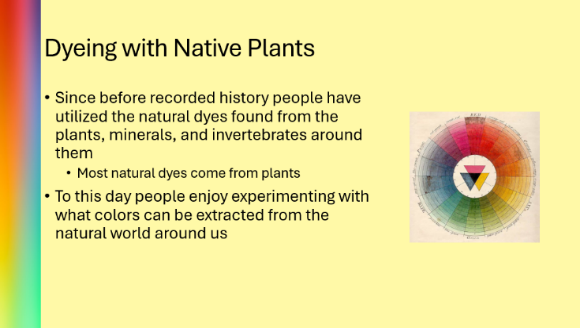
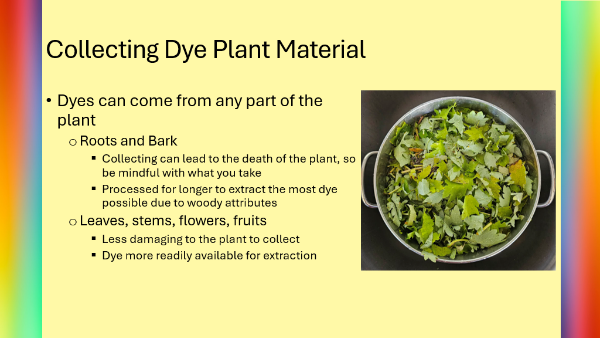
For this class Emily made dyes from sassafras bark and celandine poppy. For the sassafras dye, she harvested bark from the smaller sprouts in a sassafras colony that would have otherwise been shaded out by the larger trees. And for the celandine poppy dye she harvested leaves and stems from existing plants in the Ozark Ethnobotany Garden at Shaw. Harvesting leaves this time of year resulted in the plants flushing back out and caused them to bloom a second time!
Here are pictures of the sassafras dye and our intern, Lizzy Hoppe, placing her bandana into the dye.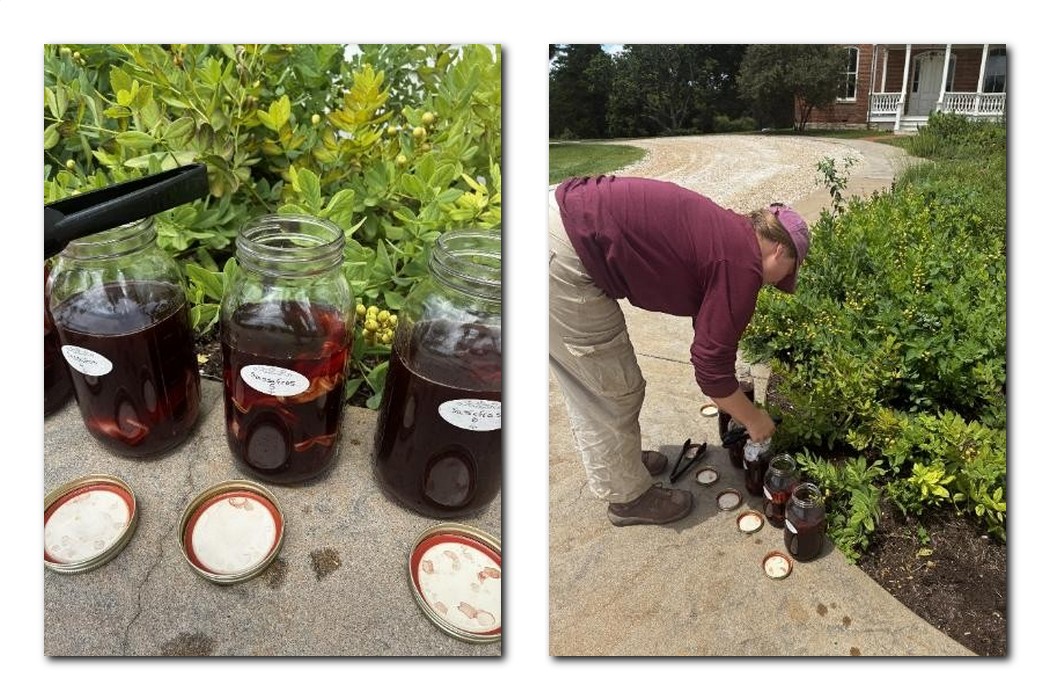
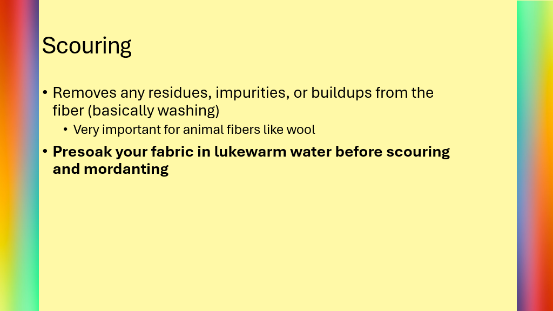
Creating dyes can be a lengthy process because once the dye is made you still need to pre-treat the fabric so the dye color will bond with the fabric. These pre-treatment processes are called scouring and mordanting. Scouring removes any residues, impurities, or buildups from the fiber. It is basically washing your fabric.
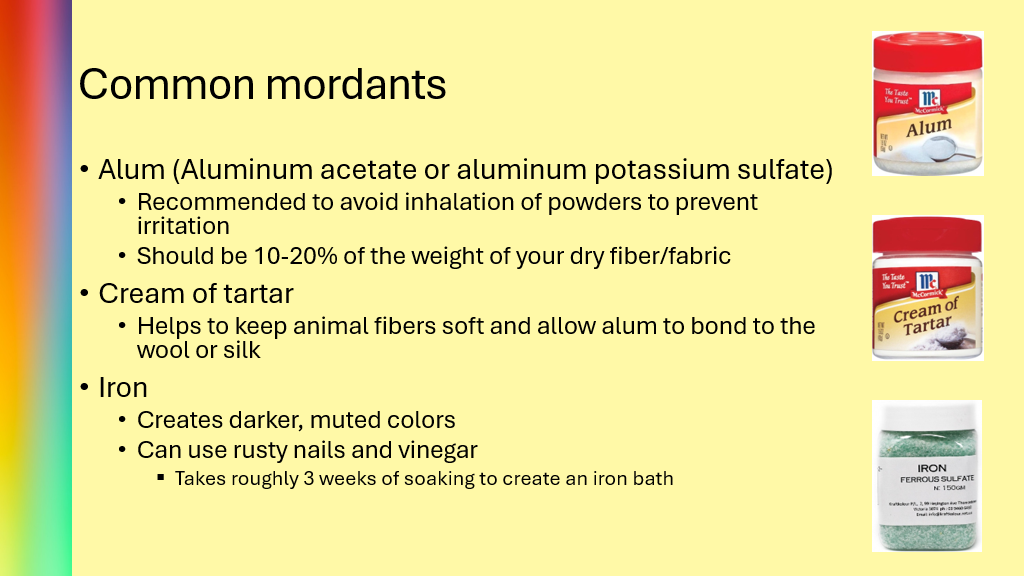
Mordants prepare the fabric fibers to bond with natural dyes and accept color.
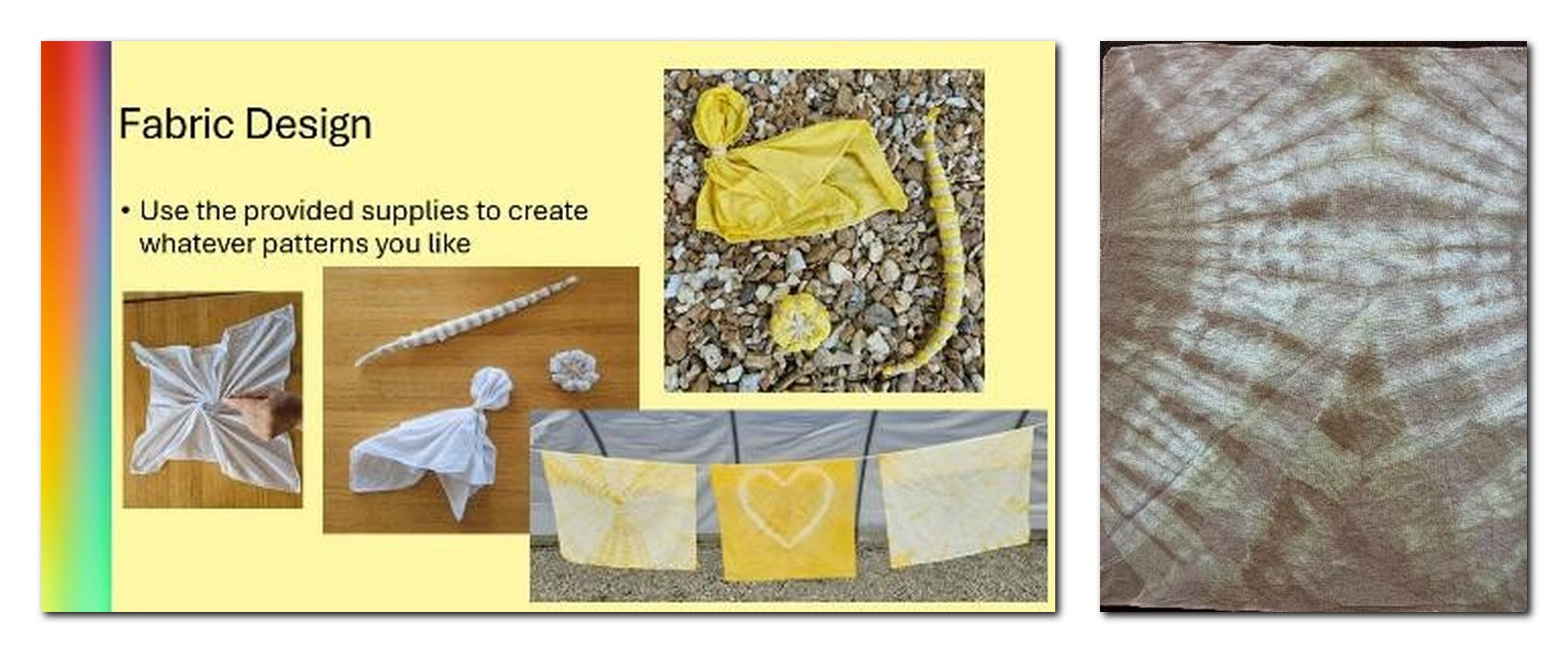
Emily showed the class many different design ideas for dying the bandanas. Everyone got creative and every bandana looked different! The sassafras dye came out to be a mellow salmon color, and the celandine poppy was vibrant yellow.
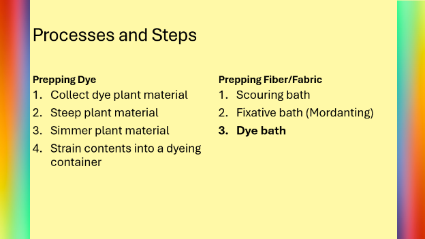
Here are the steps for making dyes and then dying the fabric…
Finally, Emily discussed all the Missouri native plants that work well for making dyes. While our bandanas were soaking in the dye, we toured the Ozark Ethnobotany Garden and discussed ways to incorporate these species into home gardens. Here is a list of the plants we discussed.
- Juglans nigra (black walnut)
- Phytolacca americana (pokeberry)
- Prunus americana (wild plum)
- Rudbeckia sp. (black-eyed Susans)
- Achilliea millefolium (yarrow)
- Juglans cinera (butternut)
- Hypericum prolificum (St. John’s Wort)
- Sanguinaria canadensis (bloodroot)
- Baptisia australis (false blue wild indigo)
- Amorpha fruiticosa (indigo bush)
- Rhus sp. (Sumac)
- Sambucus canadensis (Elderberry)
- Stylophorium diphyllum (celandine poppy)
- Sassafras albidum (sassafras)
Thanks again to St. Louis Wild Ones for sponsoring another Native Plant School class at Shaw Nature Reserve!