Instructor – Emily Dunlap, Native Plant Horticulturist, Shaw Nature Reserve
The Native Plant Horticulture Team held a hands-on workshop and shared information about native plants that can be highlighted in a native plant landscape and be processed to make cordage. Instructor, Emily Dunlap, started the class by explaining some of the historical value of being able to make your own cordage, or rope.
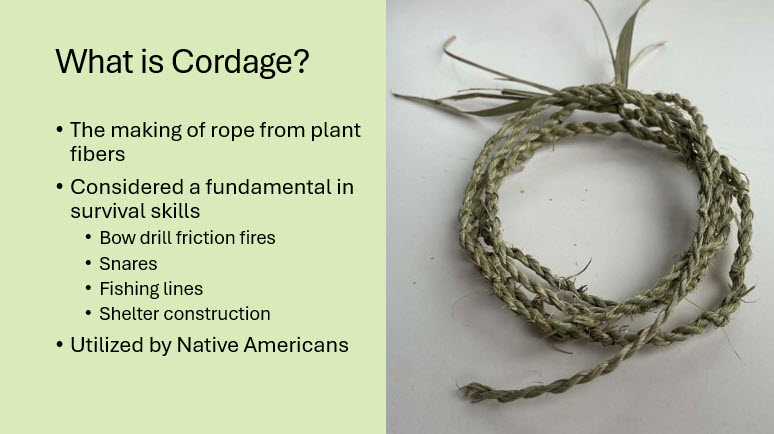
The class met in the Carriage House at Shaw Nature Reserve to discover the rich and ancient history of plant textiles in the Ozarks, followed by a demonstration on how to twine your own cordage out of plants. Included was a tour of the Ozark Ethnobotany Garden to see various plants that can be turned into cordage, as well as other native plants with ethnobotanical value.
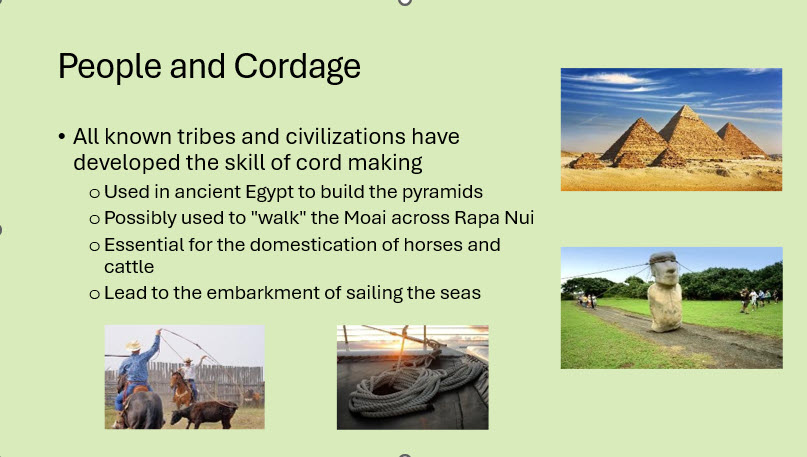
Emily shared historical examples of how plant cordage was used in the past. There is evidence that stone monuments may have been moved with the use of cordage and physics to “walk” the stones to their destination. She also discussed the use of cordage in the domestication of horses and cattle, ships and ship transportation, and pictures of how sandals and seed collection bags were made with cordage. One seed collection bag pictured in her examples had a radiocarbon date of A.D. 20!
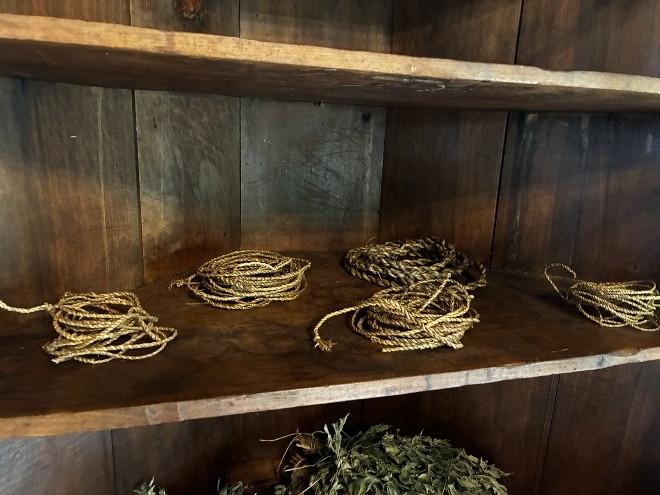
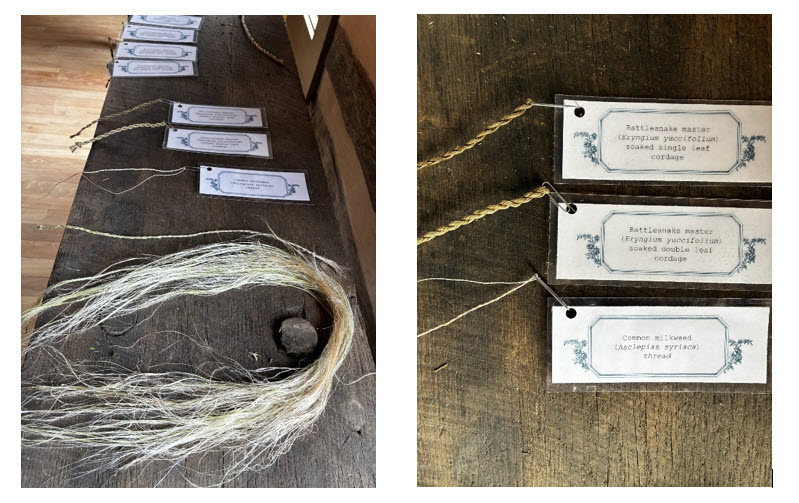
Here are some examples of cordage that Emily has made. They are on display in the David T. Orthwein Cabin in the Ozark Ethnobotany Garden.
What are native plants that lend themselves to cordage making?
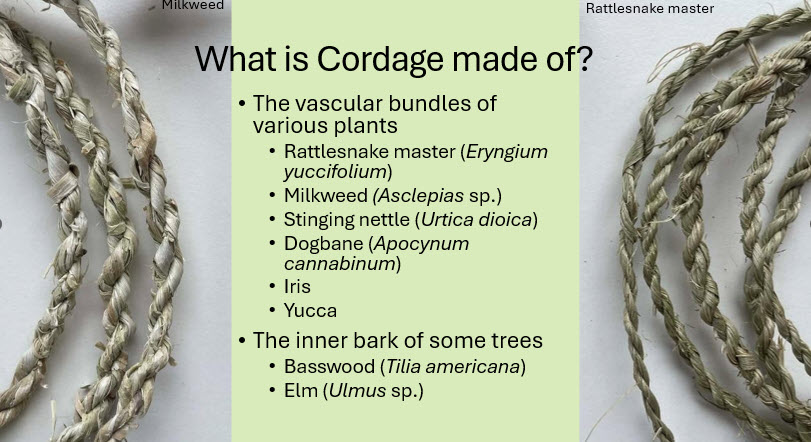
And what attributes should plant fibers have to make them ideal for cordage?
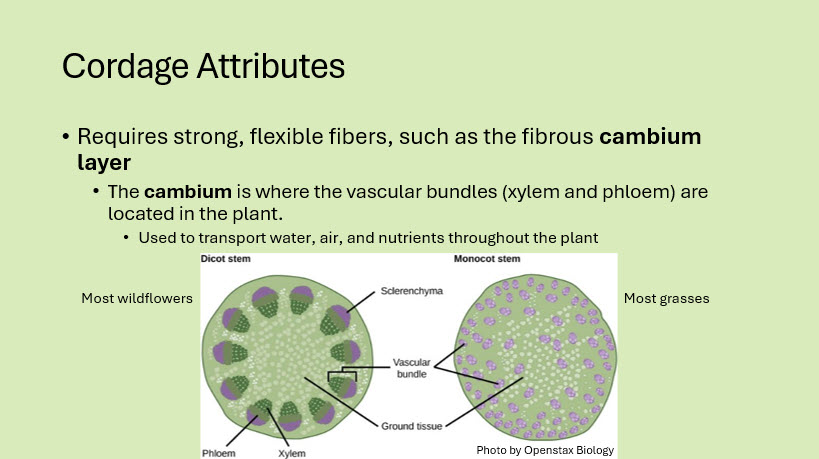
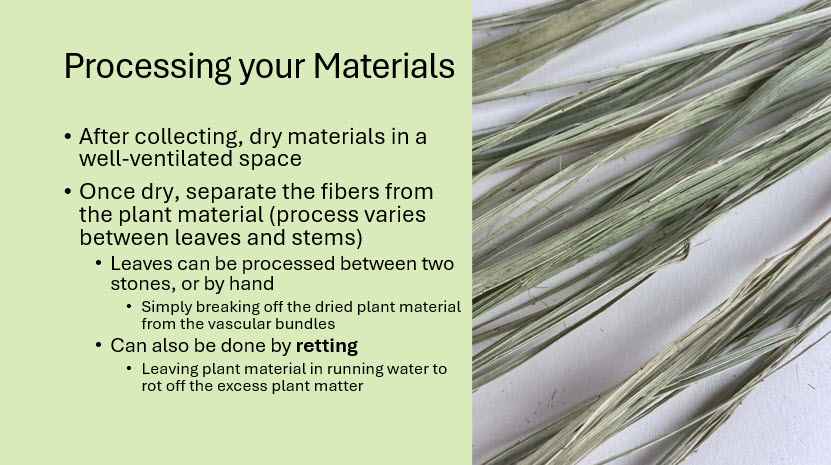
Eryngium yuccifolium (rattlesnake master) leaf lends itself to strong, thicker cordage and is easy to collect and work with. Emily showed us how to harvest the vascular bundles of Asclepias spp. (milkweeds), resulting in hundreds of fine, threadlike fibers. In the above pictures, you can see these fibers in the picture on the left. On the right bottom you can see just how fine these fibers can be woven. The resulting cordage was about the thickness of a thread.
Some things to consider while collecting for cordage…
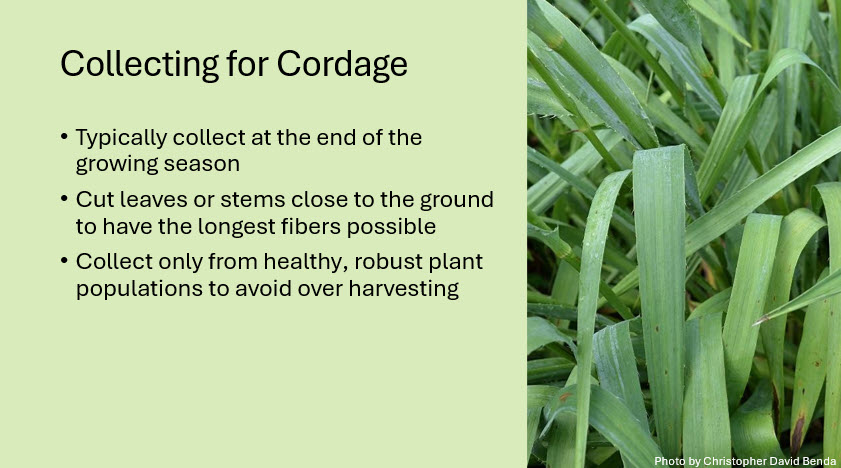
Emily stressed the importance of collecting responsibly, not only to ensure you do not damage healthy plant populations but also because many cordage plants are the host plants to insects. For example, Milkweed is the host plant to the monarch butterfly, so it is recommended to collect only stems that have already had the leaves stripped by caterpillars at the end of the season, so you are not removing their food source. Try to wait for any seedpods to ripen and disperse before harvest.
Step by step instructions:
This was my first attempt at making cordage and I will say that it was helpful to have Emily doing an in-person demonstration. She was able to correct the class participants’ method as needed and answer questions along the way.
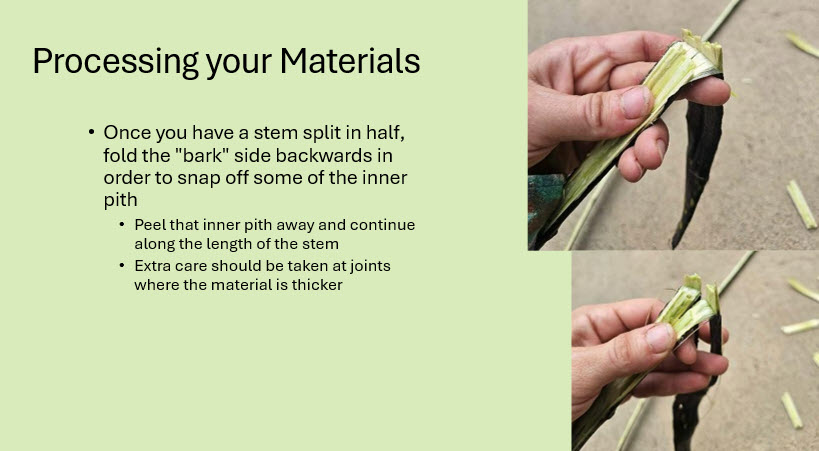
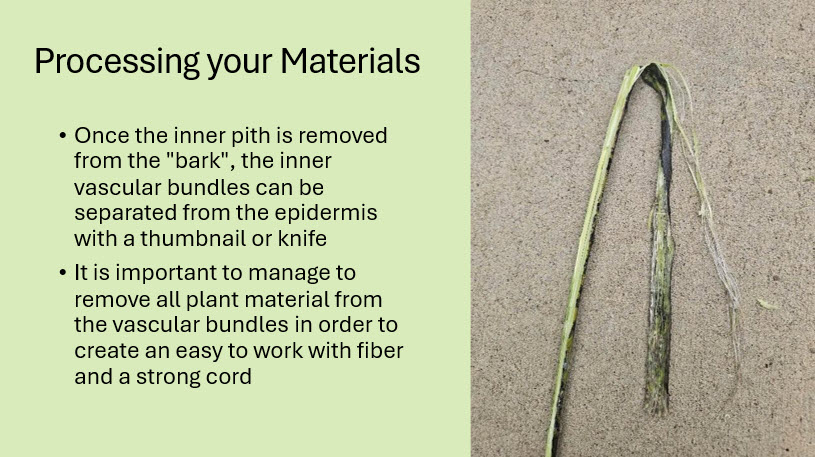
We learned that the plant material is easiest to work with if it is not too fresh, but not too dry either. The process for separating the dry plant material from the vascular bundles is different for each species. For rattlesnake master it was rubbing semi-dried leaved between your hands to get to the needed fibers and for stalks of milkweeds it looked more like the process shown above where you are removing the vascular bundles from the stalk and inner pith.
How do we weave the fibers together??
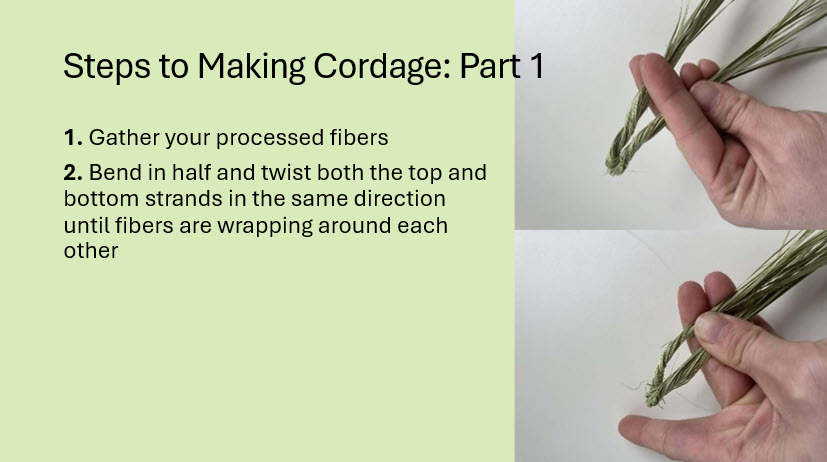
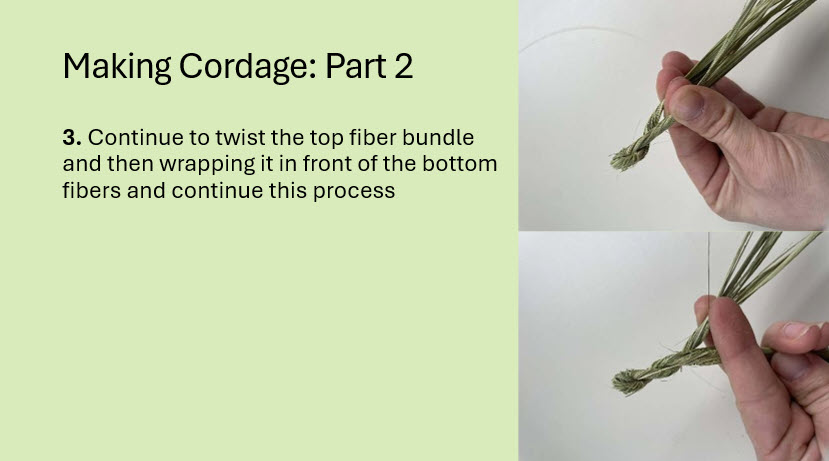
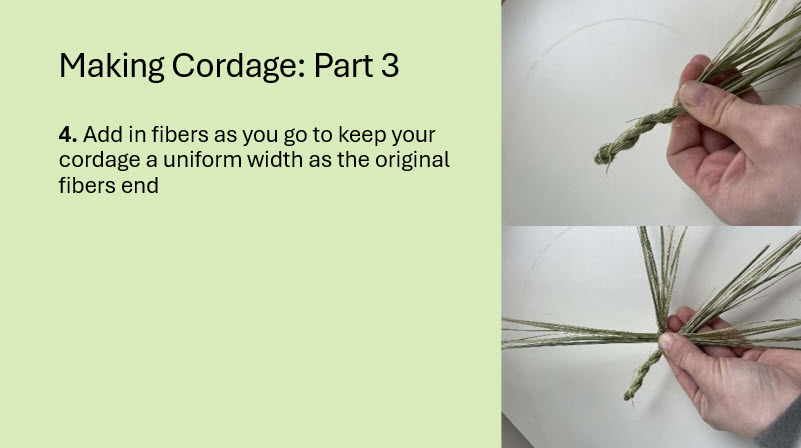
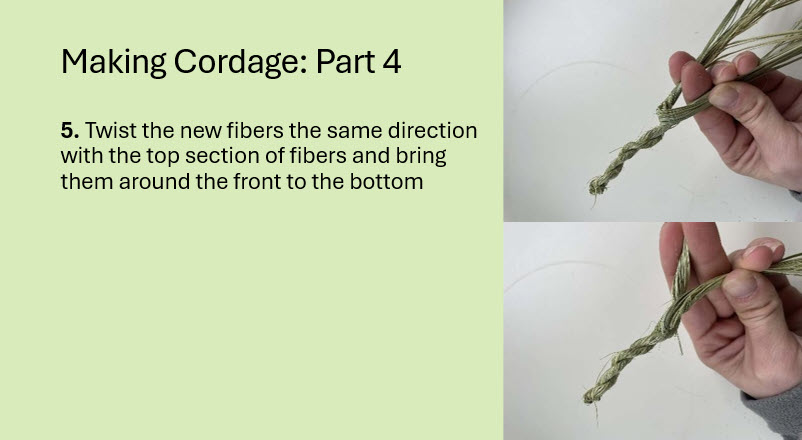
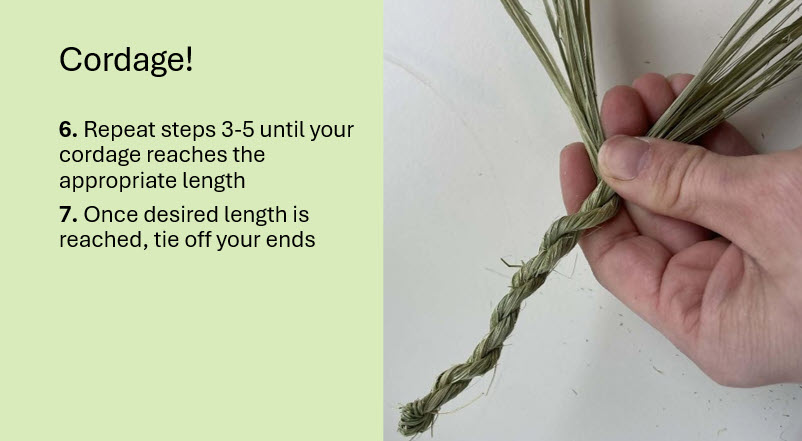
I learned that it is a process of twisting one section of the fiber away from you until you feel tension, then bring that section towards you and fold it down. Then you simply twist the second section away from you until you feel tension…and then repeat. I also learned that cordage makers of the past must have had stronger hand strength than I do!
Hopefully these pictures help in making the process clear, but again, I found it helpful to learn this skill in person with someone that can help guide you.
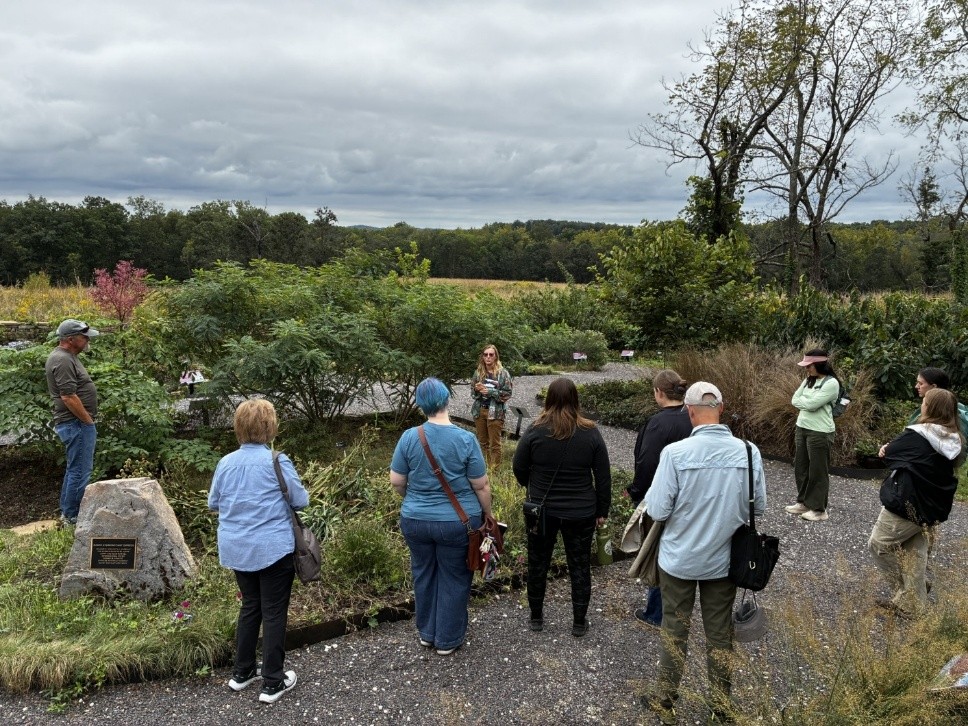
After the demonstration and hands-on activities, Emily led a tour of the Ozark Ethnobotany Garden so we could see the plants in a garden setting. The weather was cool and felt like fall. It was an enjoyable afternoon with interested participants and good conversations while we worked on our cordage on the patio of the cabin.
Thank you, St. Louis Wild Ones, for helping interested gardeners learn about a lost skill and to foster their appreciation for native plants! Several people took processed vascular bundles and plant material with them to share their newfound craft with grandkids.