
Edible Wild Plants in Missouri – A celebration of native fruits and nuts
Presenter – Dr. Kate Farley, Ethnobotanist with the William L. Brown Center, Missouri Botanical Garden
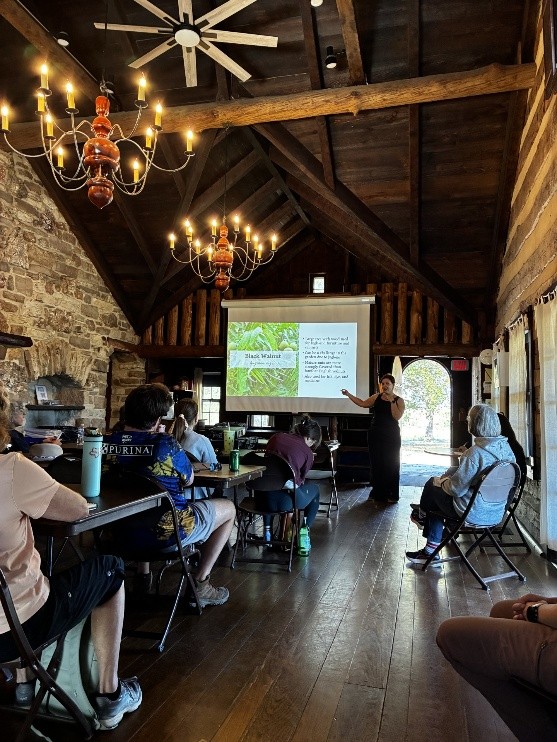 The October 2026 Shaw Native Plant School class was the perfect time of year to shine a light on some of our favorite native edible fruits and nuts. Our presenter, Dr. Kate Farley, started with a presentation that focused on sharing knowledge about three of her favorite edible native plants to cook with: black walnut (Juglans nigra), elderberry (Sambucus canadensis), and paw paw (Asimina triloba).
Black Walnut is a large tree and is native to Missouri. The female flowers give way to edible nuts encased in a yellow-green husk and are abundant during the fall. The mature nuts have a rich, distinct flavor and are more strongly flavored than the familiar English walnuts. Kate likened the flavor to that of blue cheese and recommended adding the nuts to homemade bread.
Kate explained that historically, people used black walnuts medicinally as a dewormer and that the need to deworm oneself was a necessity in folklore of the Ozarks. Black walnut was also used for making ink and dye. If you’ve ever tried to get to the nut meat of a black walnut, you know that it can stain your hands brown! Today, people use desirable black walnut wood for producing high-end furniture and cabinets.
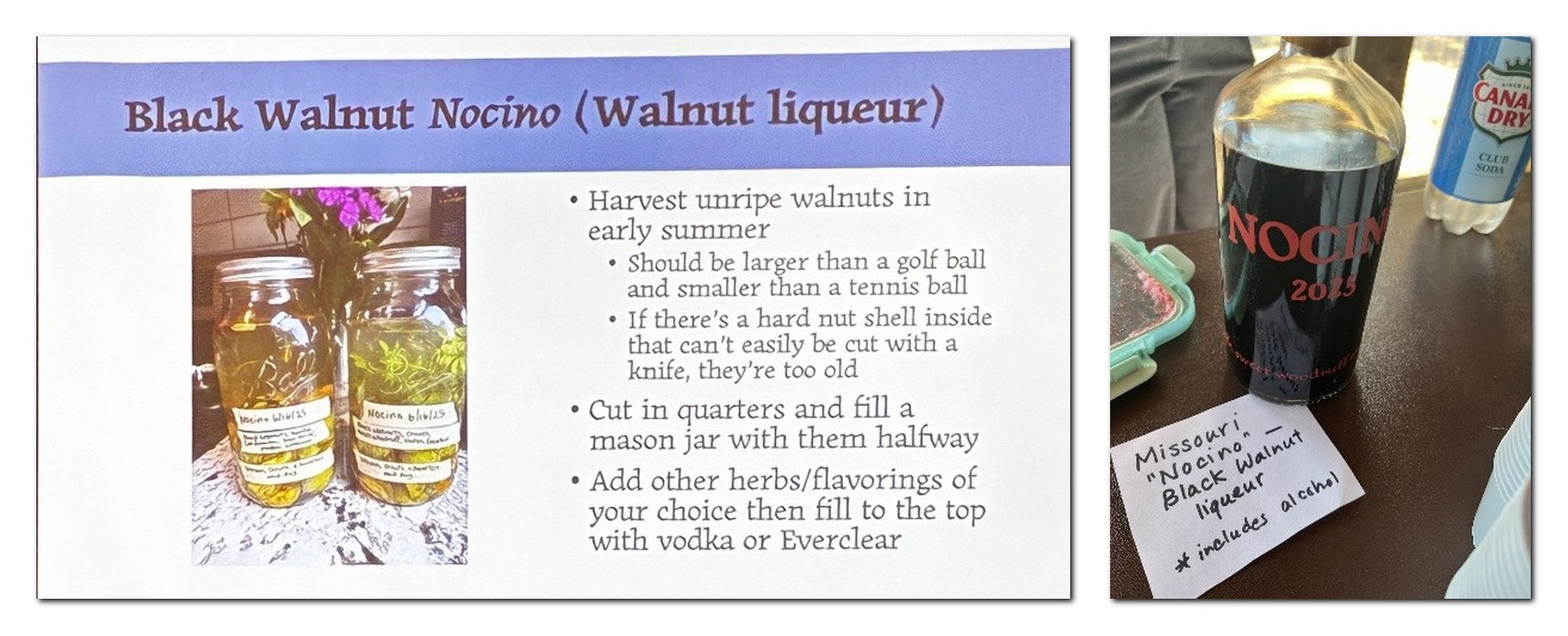
Kate made a black walnut Nocino (No-chee-no), or black walnut liqueur, for us to sample. She used green (unripe) black walnuts steeped in a neutral flavored alcohol for two months until the liquid turned black. Then, she strained out the solids and added water and a sweetener (sugar or maple syrup). Kate said that it’s important at that point to let it age in the bottle for several more months to mellow out the harsh tannins. If you harvest your green walnuts earlier in the season, you should have a delicious Nocino to share with friends at your end of year holiday celebrations!
Elderberry is a somewhat sprawling, suckering native shrub with beautiful flowers and then later, berries that attract birds to your yard. They can fit into larger home landscapes nicely when allowed to naturalize and become a shrub border.
The flowers and berries can both be utilized, but for different purposes. The flowers have been purported to help with fevers and the fruit, when cooked and processed into a syrup, is said to help boost the immune system and reduce symptoms of colds and flu. Elderberries have chemical compounds that can be toxic in certain parts of the plant, and you must cook the fruits before using them to avoid stomach upset. Kate issued a warning that the leaves, twigs, and bark should be avoided. They are laxatives and can cause vomiting.
Ethnobotanically speaking, there is a lot of folklore associated with elderberry. It was storied to provide entrance to the fairy realm and to provide protection from witches. If you are a Harry Potter fan, you might remember the magic elder wand made of elder wood!
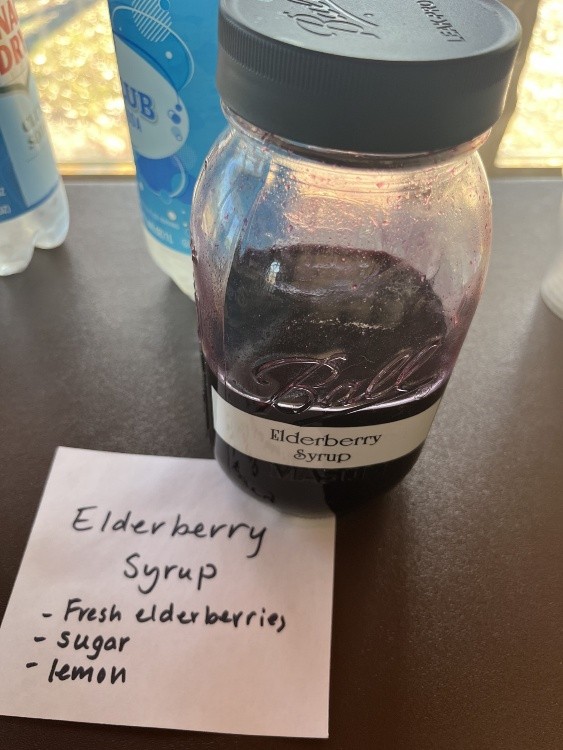
Kate made delicious elderberry syrup by cooking down elderberries and then, after straining, adding a little sugar and lemon juice. You can also add spices if you’d like…maybe some cinnamon, cardamom, or star anise? We sampled it over vanilla ice cream and also alone with a splash of club soda.
Paw paw is a small, native tree that grows in colonies and produces a yellowish-green fruit that matures in early autumn. The flavor and fleshy consistency of the fruit resembles banana custard, and the fruit looks a bit like a mango. They are the only non-tropical species in the custard apple family.
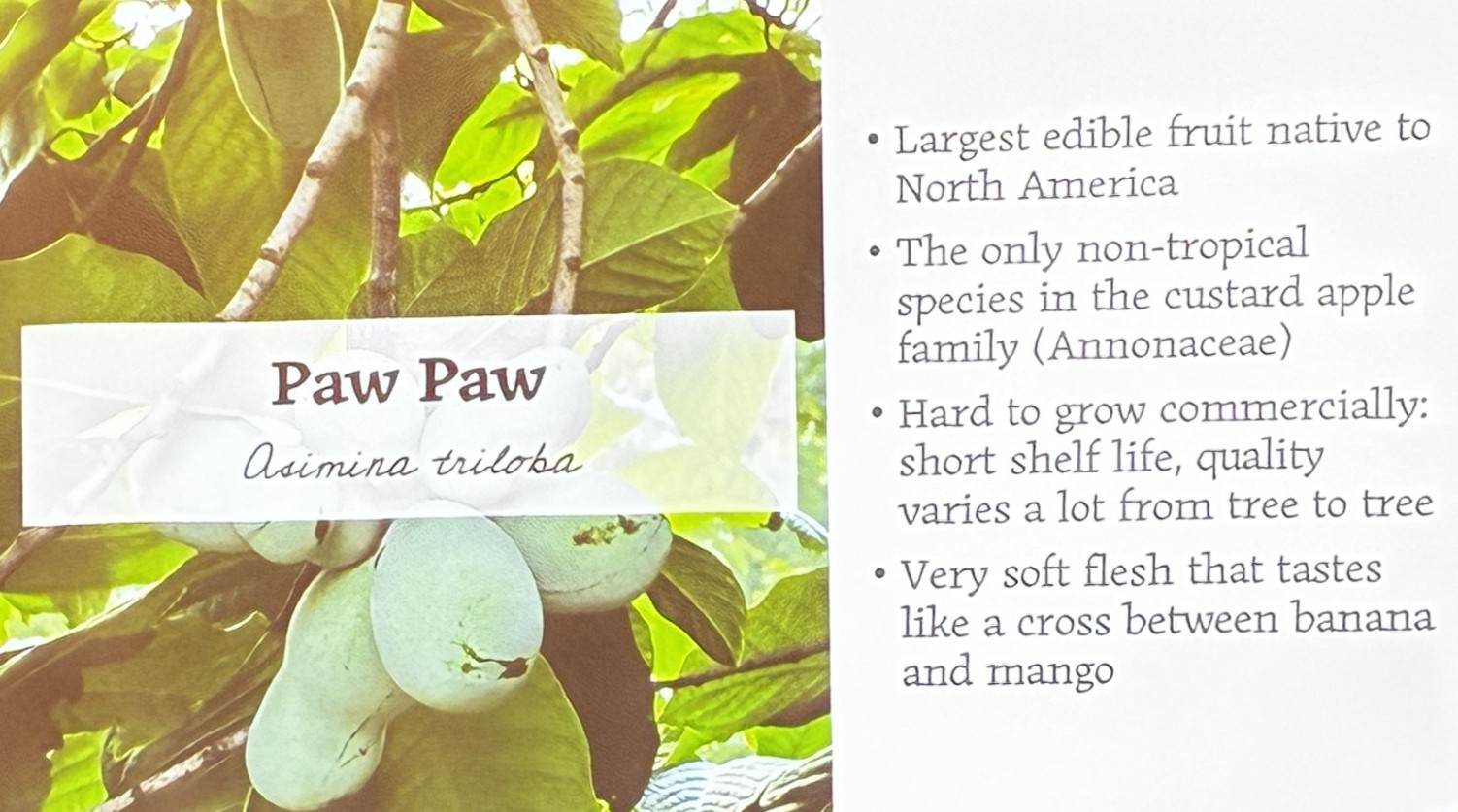
Paw paw fruit is not very shelf stable, so it’s not common to find them in grocery stores. Occasionally you can find them for sale at farmer’s markets, but even then, you need to either freeze or process them quickly. Also, wildlife loves to climb the trees to reach the fruit and often get to the harvest before humans.
If you are lucky enough to have a bag of paw paw fruits in your possession, Kate recommended trying this paw paw panna cotta recipe. It’s super simple, but sure to impress your dinner guests!
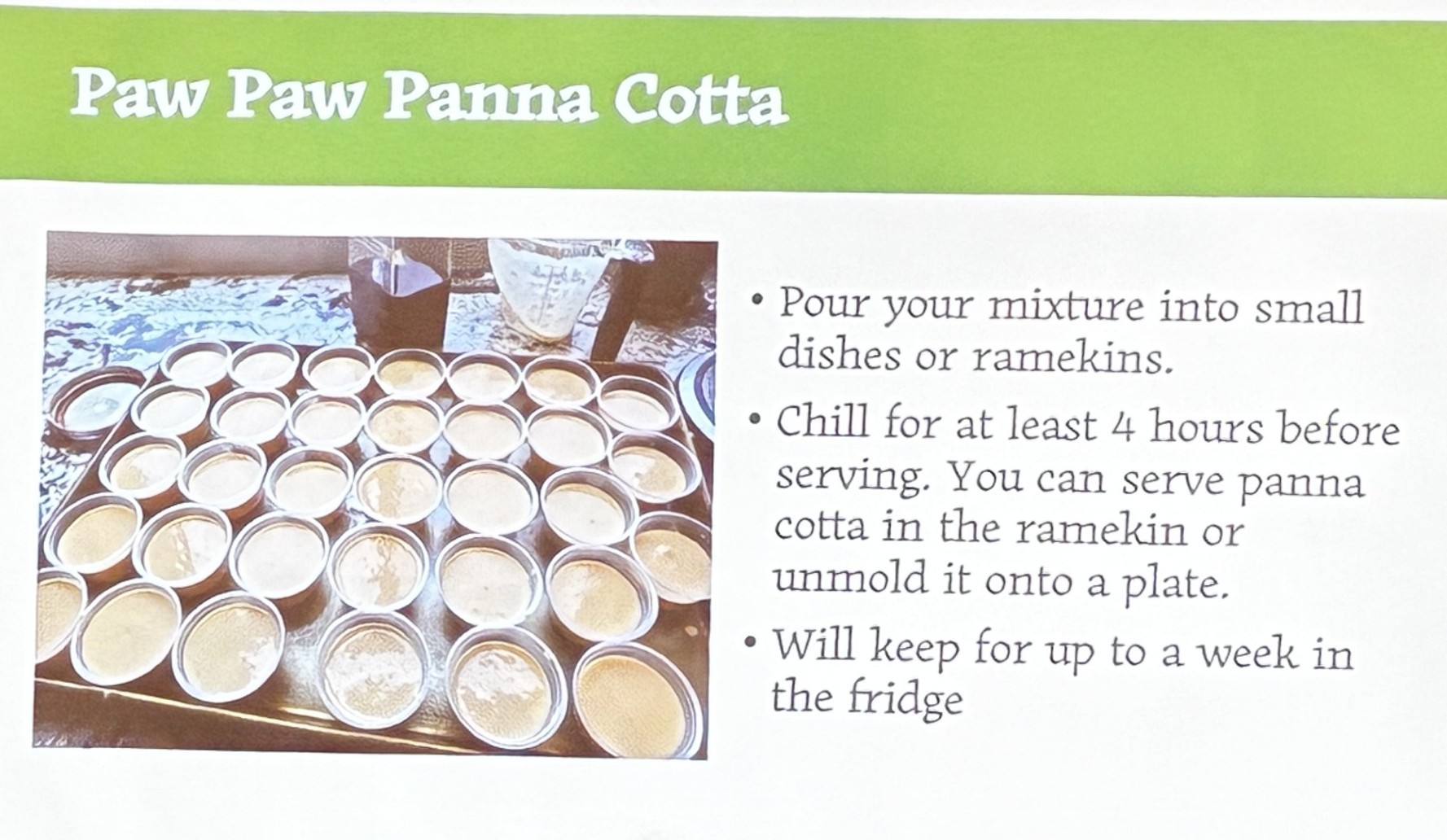
Paw Paw panna cotta recipe (serves 4-6)
2 cups heavy cream
8 oz. paw paw pulp
¼ oz. (1 packet) plain gelatin
1/3 cup of sugar
¼ tsp. salt
1 Tablespoon vanilla extract
- Defrost your paw paws (if needed).
- Puree the paw paw pulp with vanilla extract in a blender until smooth. Set aside.
- Take ¼ to ½ Cup of cream and put it in a bowl. Sprinkle gelatin on top to “bloom” for 5-10 minutes.
- Heat your cream on the stove. Once it is steaming, turn off the heat.
- Add sugar, salt and gelatin-cream mixture.
- Stir until the sugar and gelatin are fully dissolved, for about 5 minutes.
- Add the warm cream mixture to the blender with your paw paw pulp.
- Blend until smooth and strain through a fine meshed sieve.
- Pour your mixture into small dishes or ramekins.
Chill for at least 4 hours before serving. You can serve panna cotta in the ramekin or unmold it onto a plate. It will stay in the fridge for up to a week.
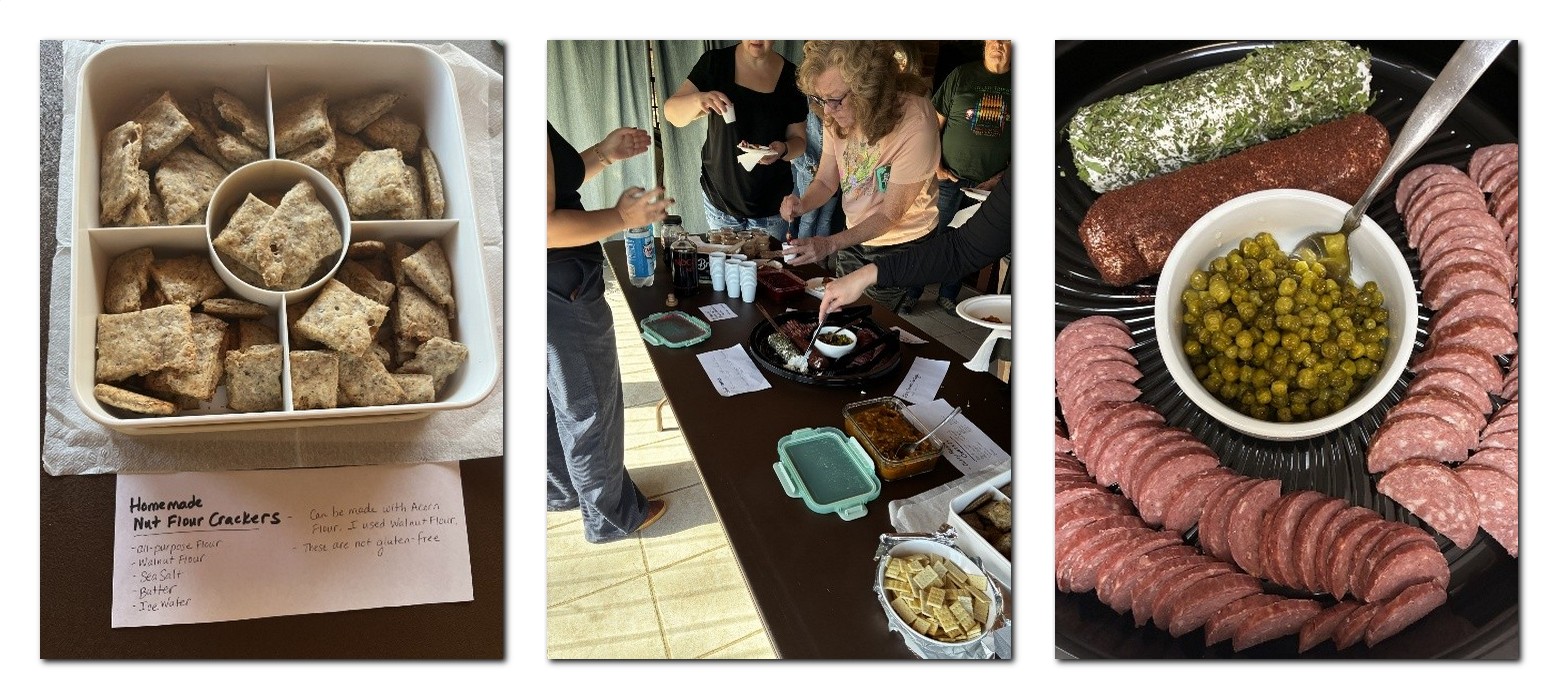
After Kate’s presentation, the class of 20 participants enjoyed trying a buffet of native edible plant recipes made by both Kate and Jen Sieradzki (Native Plant Horticulture Manager at Shaw Nature Reserve). Some of the other foods served were curried persimmon chutney (Diospyros virginiana), homemade nut flour crackers, goat cheese encrusted in dried bee balm (Monarda fistulosa) and smooth sumac (Rhus glabra), served alongside venison summer sausage and pickled cucumber vine fruits (Melothria pendula).
 Thanks to St. Louis Wild Ones for ongoing support of the Shaw Nature Reserve Native Plant School classes! Connecting people to native plants is a rewarding shared goal!

I’d like to know a relatively easy way to obtain the meat from black walnuts. They are very hard to crack, even if you remove the green shell.