Native Plant School – May 21, 2026
Nature’s Bumps and Lumps: The Mysterious World of Plant Galls
Summary by Jen Sieradzki, Manager of Native Plant Horticulture for Shaw Nature Reserve
Instructor: Daria McKelvey – Supervisor, Home Gardening Information and Outreach, Missouri Botanical Garden
Daria McKelvey is the Horticulture Supervisor for the Kemper Center for Home Gardening at Missouri Botanical Garden. Her responsibilities include the Plant Doctor Desk and Horticulture Answer Service, Plant Finder, and the Gardening Help website. She enjoys teaching and sharing about how amazing plants are. In her spare time Daria enjoys botanizing, hiking, and nature photography. While hiking in natural areas in Missouri she has made fascinating observations about galls on Missouri native plants and documents them by taking photographs of these mysterious growths.
Galls are often described as “an abnormal growth on a plant”, but they’re much more than that! They may look odd, but they serve as a key structure in which many insects, mites, and fungi rely on to complete their life cycles. Galls function as a temporary structure that insects can feed, lay eggs, and develop in. During this class we looked at how they are formed, where they can be found, and some of the most common types seen in the Midwest.
According to The Morton Arboretum, “In the majority of cases, plant gall damage is an aesthetic problem and is not considered serious. Affected trees ordinarily show little injury, although foliage of young trees is sometimes extensively deformed. A few stem galls can do damage by girdling stems. Galls caused by pathogens may cause more serious damage.”
Parts of a gall include the outer shell that acts as a protective layer. That layer can look quite different depending on the species of gall. They can be hard and spiny or even furry or spongey. The middle layer of a gall acts as insulation. And then the inner larval chamber provides a food supply for the developing larva. Before taking control measures, remember that the gall could be supporting beneficial insect species.
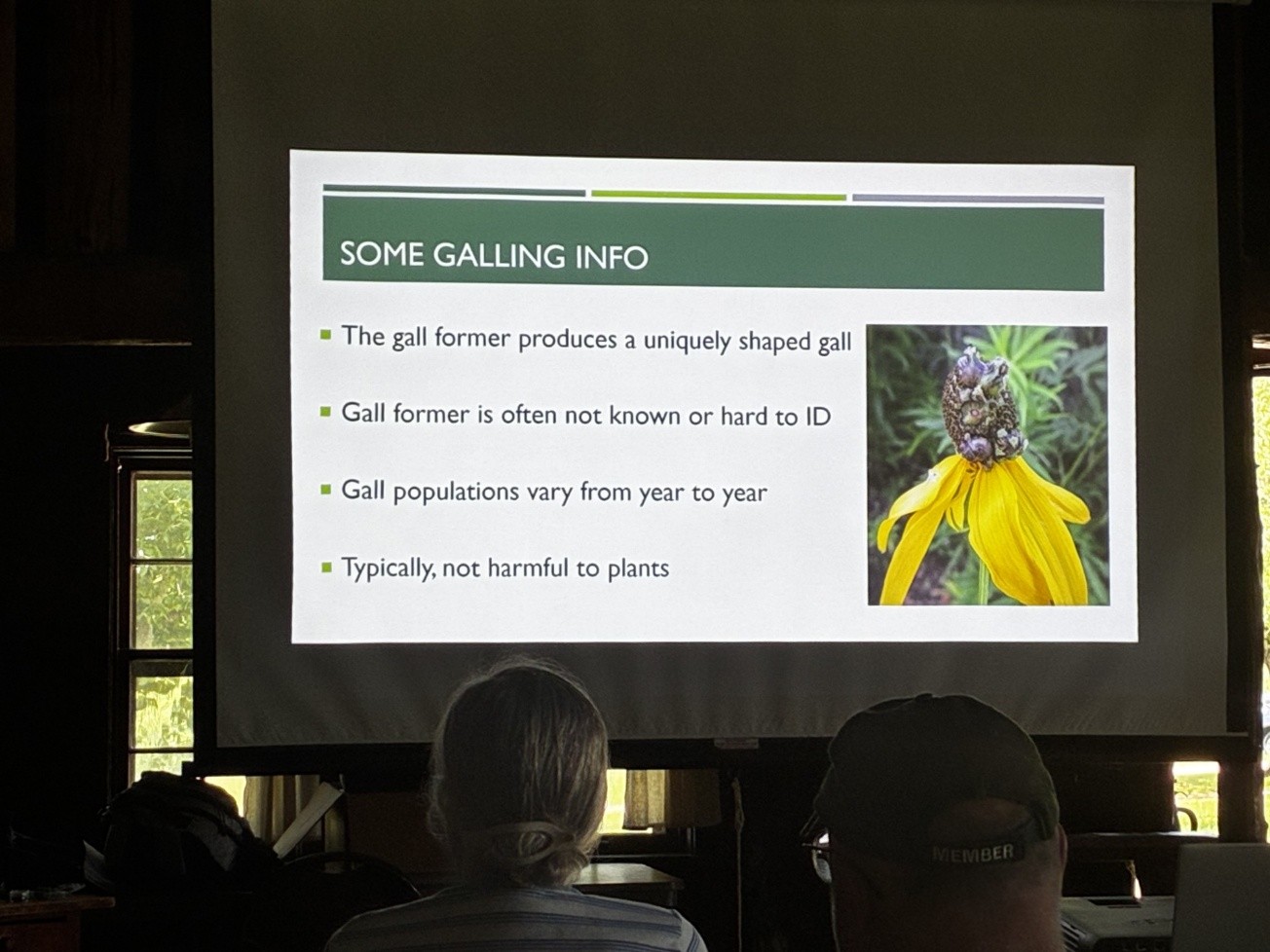
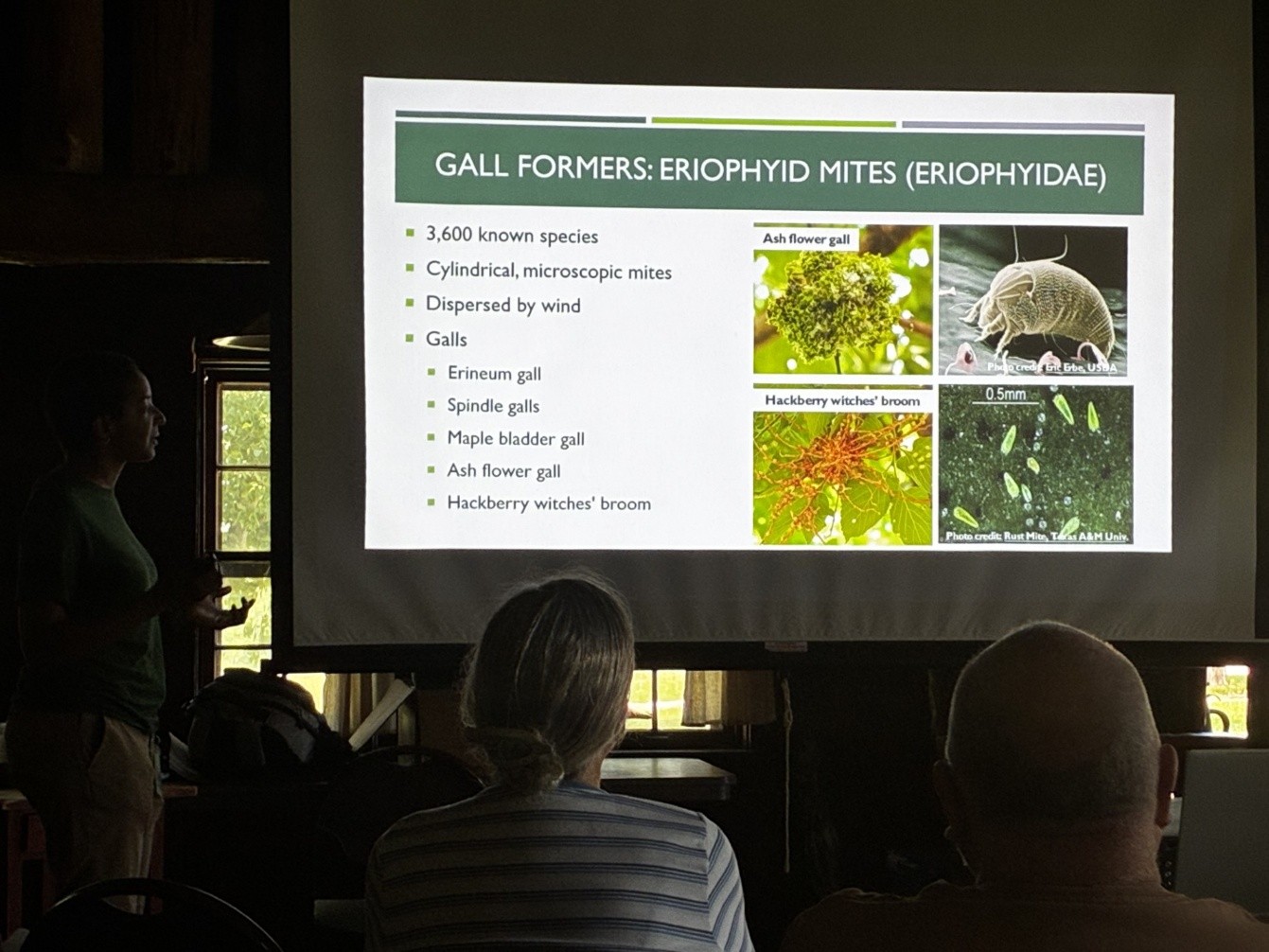
It can be difficult to determine what forms or makes galls. Galls can be a response to fungi & bacteria, virus, Eriophyid mites, insects like wasps, sawflies, midges, flies, aphids, adelgids, or phylloxera. Daria focused mostly on galls caused by insects.
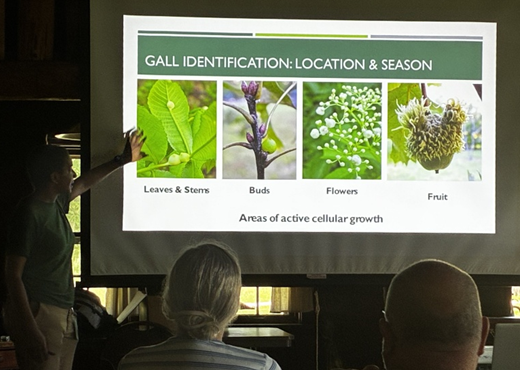
Galls can present in many ways and can appear on many different parts of plants: leaves and stems, buds, flowers, and fruit. Basically, they can appear in any area of active cellular growth. And plants can have more than one species of galls growing on them at a time.
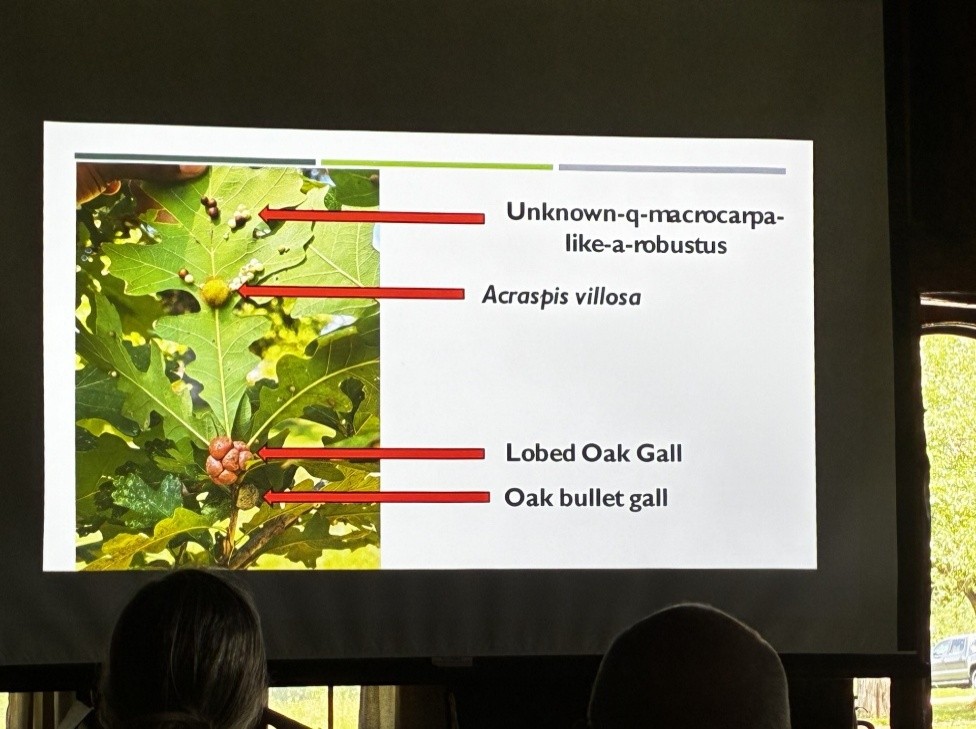
Here is an image of an oak leaf with four different species of galls; three identified and one unknown gall labeled as “unknown Quercus macrocarpa gall”
Common species of native Missouri plants that you might find galls on include oaks and beeches (Fagaceae family), asters (Asteraceae), and roses, brambles, and native black cherry like Prunus serotina (Rosaceae).
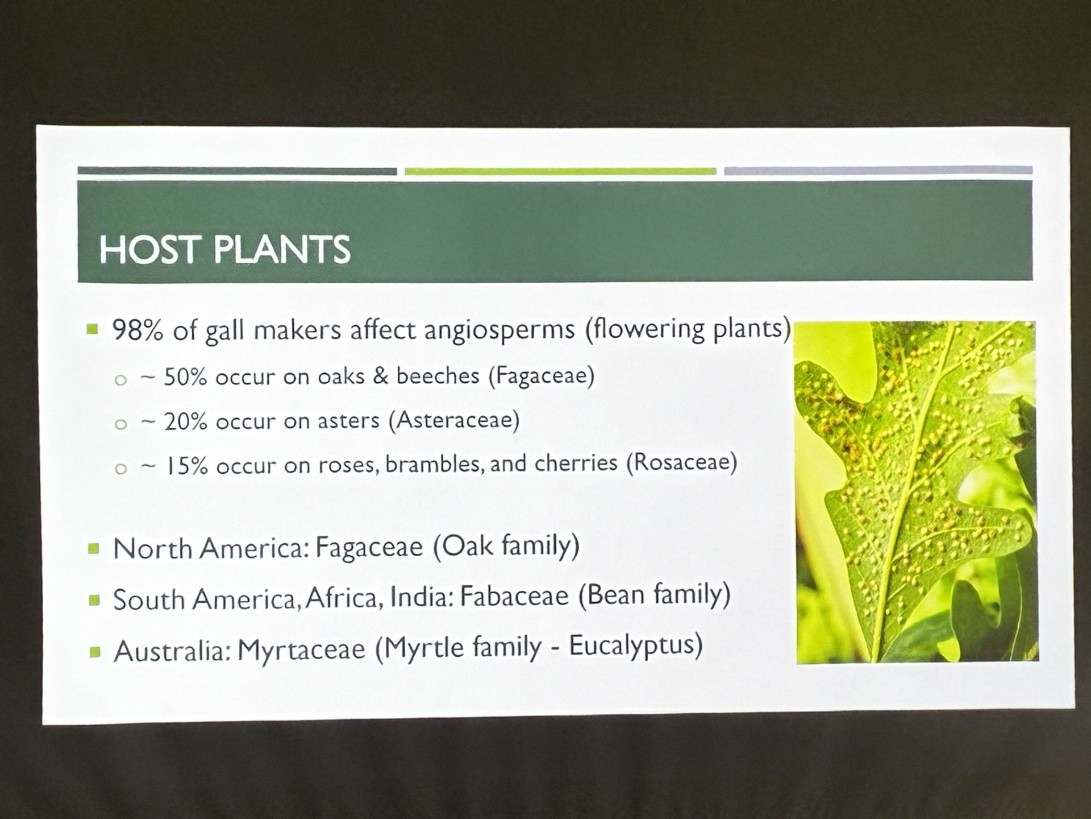
Common galls in the Midwest include witch hazel cone gall, Hawthorn pod gall, oak apple gall, Hackberry nipple gall, and bladder galls on fragrant sumac. Many oak trees have galls with 50% of galls occurring on oaks and beeches (Fagaceae family).
Daria shared interesting and colorful photographs of the many weird ways that galls can present themselves.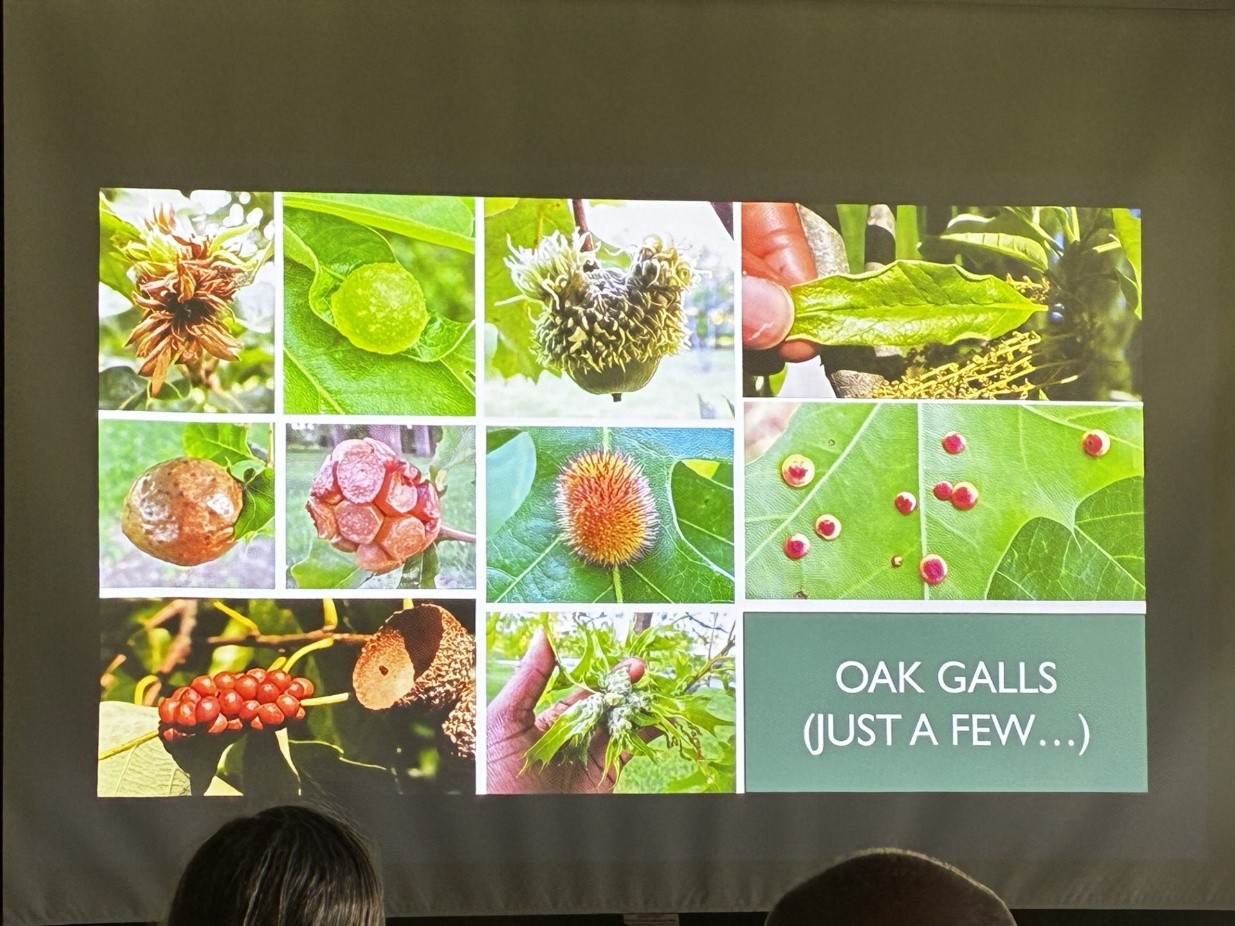
Daria told us that there are galls all over the world. But galls are specific to the insect forming the gall and specific to the species of plant. Galls that you would find in the St. Louis region will be different that galls that you would find in Texas. Daria has traveled the world observing all kinds of galls. The slide below shows examples of galls from west Texas, Colorado, and even in Tokyo, Japan!
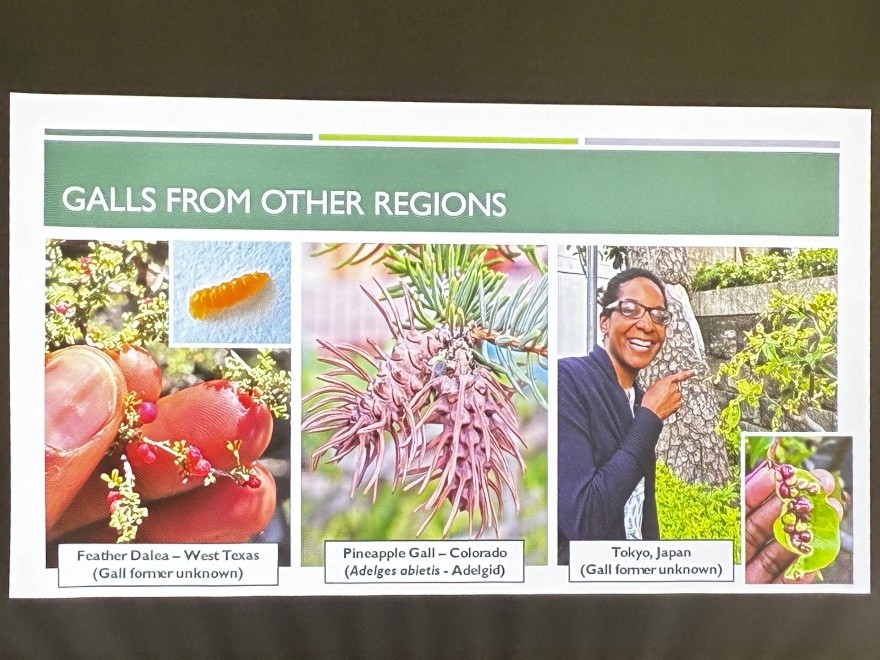
In summary, most galls are not harmful to the tree or shrubs’ long-term health. While some gardeners may find them unsightly, Daria’s gall photography convinced the class that they are worth further investigation.
For more information on galls, check out the Missouri Botanical Garden website link!
And even more info from The Morton Arboretum…
https://mortonarb.org/plant-and-protect/tree-plant-care/plant-care-resources/plant-galls/#management
Thanks to the St. Louis Wild Ones for supporting such an interesting and educational program! I never knew that galls are so important in supporting our insect friends!